
Supreme Court Upholds Birthright Citizenship, Rejects Trump’s Order
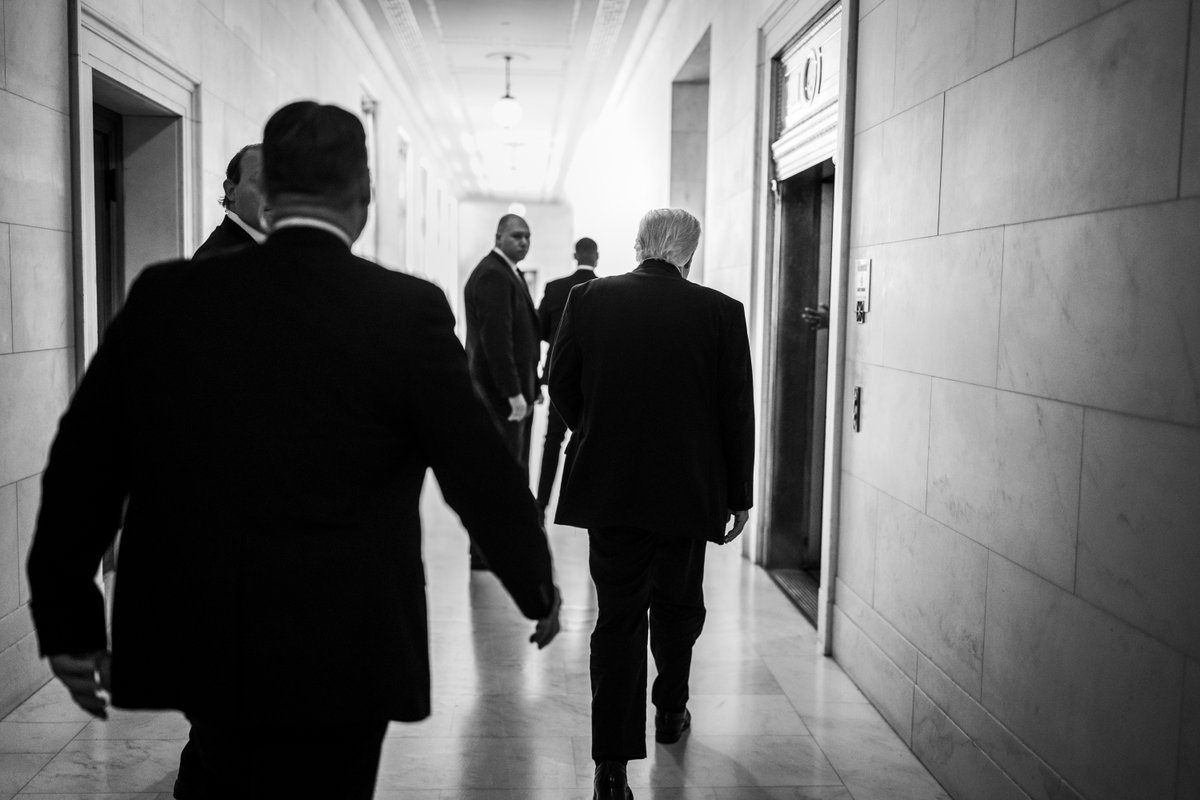
White House file photo which was captioned: “
HISTORIC: President Donald J. Trump attends U.S. Supreme Court oral arguments on birthright citizenship, the first sitting president ever to do so.”
India-West News Desk
WASHINGTON, DC – The conservative US Supreme Court on June 30 upheld birthright citizenship, ruling that children born in the country are automatically U.S. citizens regardless of their parents’ immigration status and striking down an executive order issued by President Donald Trump that sought to limit that constitutional guarantee.
Trump signed the executive order on Jan. 20, 2025, the first day of his second term, seeking to deny automatic citizenship to many children born in the United States to undocumented immigrants and certain temporary visa holders.
The order was quickly challenged in court, with several federal district judges ruling that it violated the Constitution. Two federal appeals courts later upheld injunctions preventing the policy from taking effect while the legal challenge proceeded.
In what was seen as a sign of intimidation, Trump became the first sitting president to attend a mhearing on the case.
The Supreme Court’s decision means the executive order cannot be enforced. The ruling now leaves intact the long-standing interpretation of the 14th Amendment, adopted in 1868, which states that all persons born or naturalized in the United States and subject to its jurisdiction are U.S. citizens.
In a majority opinion written by Chief Justice John Roberts, the court held that children born in the United States to parents who are in the country unlawfully or temporarily are protected under the Citizenship Clause of the 14th Amendment.
“Children born in the United States to parents unlawfully or temporarily present are ‘subject to the jurisdiction’ of the United States and are citizens at birth under the Fourteenth Amendment’s Citizenship Clause,” the ruling stated.
Roberts was joined by Justice Amy Coney Barrett and the court’s three liberal justices Elena Kagan, Sonia Sotomayor and Ketanji Brown Jackson.
Justice Brett Kavanaugh agreed that Trump’s executive order could not stand, although he said it conflicted with a federal citizenship statute enacted in 1940 rather than the Constitution itself.
The court’s three other conservative justices, Clarence Thomas, Samuel Alito and Neil Gorsuch, dissented. Alito criticized the decision, writing that “the Court has made a serious mistake.”
Daljit Singh
/
We hope this decision will serve as a learning opportunity for MAGA followers, if they read and understand the case and the Supreme Court’s decision, that the U.S. Constitution grants full rights of citizenship to all those born in the country and its territories, regardless of where their parents are from or where they reside.
June 30, 2026