San Jose Artist Takes Music Beyond The Voice, Whistling Tunes And Emotions
By Arun Perunkolam
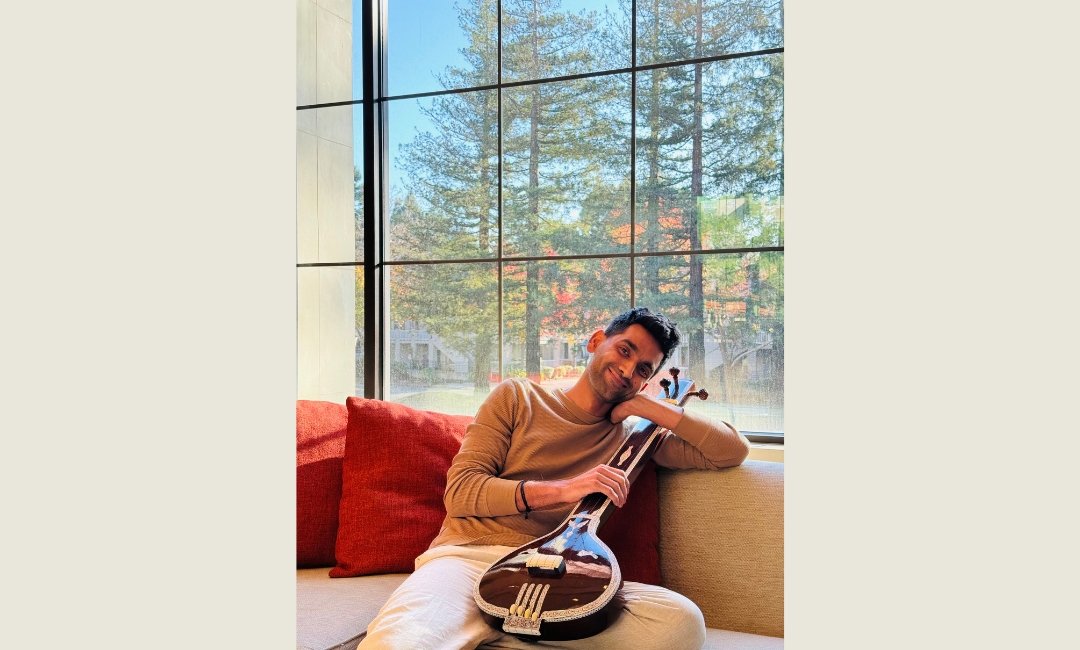
I never set out to become a Carnatic whistling artist.
My earliest memory of whistling Carnatic music goes back to seventh standard, when I was learning vocal music from my first guru, Smt. Suguna. I vaguely remember working on the Darbar varnam ‘Chalamela’. One day at school, I started whistling the chittaswaram from the varnam.
I wasn’t trying to do anything unusual. I was simply whistling what I had been learning in my vocal class. Then I realized: I could actually reproduce those swaras and phrases through my whistle.
That was it. There was no plan behind it. I was just a kid whistling a chittaswaram at school.
Couple of years later, something happened that gave me my first taste of what the whistle could do beyond my own curiosity. For a school fest, I performed a cover of ‘Kal Ho Naa Ho’ with a friend who was a beatboxer. There were several schools participating, and somehow that performance took off. I became something of an overnight sensation at the event, with people suddenly recognizing me as “the guy who could whistle songs.”
At the time, I didn’t think of it as the beginning of anything serious. But looking back, that experience stayed with me. It showed me that the whistle could hold an audience’s attention in a way I hadn’t really considered.
It wasn’t until many years later that I began wondering how far I could take the whistle within the Carnatic framework.
From something I could do to something I wanted to explore
During COVID, I started posting raga alapana videos on Instagram. Until then, I was essentially someone who could whistle Carnatic music. But the response to those videos made me look at it differently.
People began commenting on the precision of the notes and phrases and comparing what they were hearing to vocal music. Some listeners who understood Carnatic music were picking up on the nuances, while others who had no background in the tradition were simply connecting with the sound.
That was when something clicked for me: this could be more than whistling. The whistle could potentially function as another medium through which the Carnatic musical vocabulary could be expressed.
My approach to practice is actually quite simple. I don’t have a separate “whistling syllabus.” My formal training is in Carnatic vocals, and whatever I learn vocally, I try to reproduce through the whistle.
If I learn an intricate phrase, an alapana or swarams at different speeds in vocal practice, I try to reproduce the same thing while whistling. The musical learning comes from the vocal tradition; I am essentially asking myself how faithfully I can translate that learning into another medium.
The technical challenge
Whistling has its own physical demands.
Unlike singing, where the voice-production system creates the tone, the whistle depends heavily on the control of air. Sustaining a note while maintaining consistent tone and pitch requires a great deal of control. When performing fast swarams, even a small change in air pressure can affect the pitch.
One of the things I constantly work on is making the listener feel no difference in the sound whether I am inhaling or exhaling. The goal is for the musical line to continue naturally.
And sometimes the biggest challenge is much less glamorous: keeping my mouth and throat from drying out. After a long alapana or detailed composition, the amount of air movement can leave you desperately wanting a sip of water.
The audience hears the music. They don’t necessarily see everything happening behind it.
Making the whistle carry emotion
For me, the real test isn’t simply whether I can reproduce the notes.
Carnatic music isn’t only about pitch and rhythm. There is raga, gamaka, phrasing, bhava and manodharma. When I approach a composition, I first try to understand its emotional world.
Take Shyama Shastri’s ‘Bhairavi Kamakshi’ swarajathi, for example. Before thinking about reproducing the phrases, I think about the emotion behind the composition. Is it a prayer? A longing? A cry? An expression of joy?
That understanding influences how I approach the raga and the composition through the whistle.
Bhairavi is a weighty and deeply expressive raga, so the challenge is not merely to get the notes right. The listener should be able to settle into the mood of the raga and feel the emotional intent of the music.
I don’t think the whistle can do something that a trained vocalist cannot. That’s not the point. For me, it offers a different texture and a different way of experiencing the same musical language.
From surprise to connection
The internet has made the reaction to this experiment particularly interesting.
Some of my videos have reached hundreds of thousands of views, but the numbers aren’t what have stayed with me most. It is the range of people who respond.
Carnatic musicians and listeners sometimes point out specific notes, phrases or nuances. At the same time, I’ve received messages from people with no background in Carnatic music telling me that they connected with the emotion of a performance.
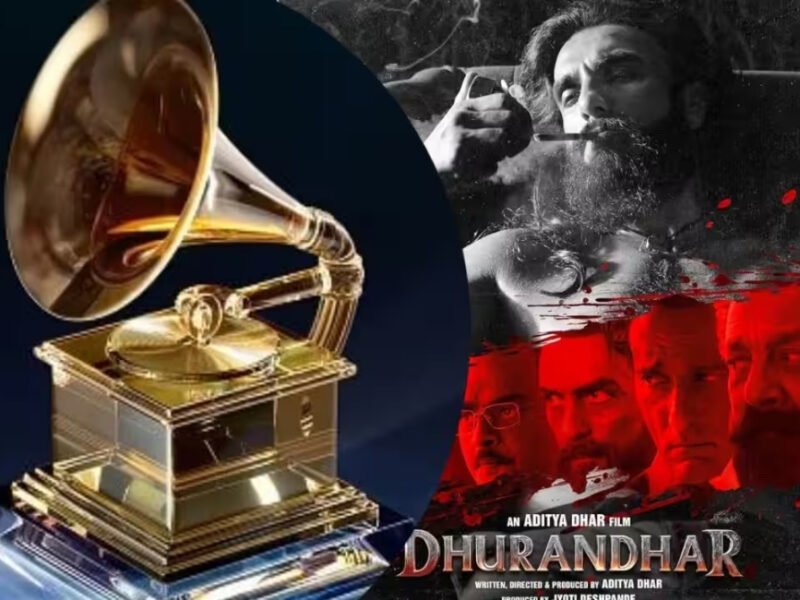
I’ve also had some particularly memorable responses from musicians connected to the original works I’ve interpreted. My whistled version of ‘Periyone Rahmane’ from ‘Aadujeevitham’ received a response from Khatija Rahman, and the vocalist behind ‘Varaha Roopam’ from ‘Kantara’ also commented on my rendition. Shashwat Sachdev, the music director of ‘Dhurandhar’, also reposted my whistled interpretation of a Ramana Balachandran veena interlude from ‘Phir Se’. These moments have been especially meaningful because they showed me that the whistle could create a connection not just with audiences, but with musicians and creators whose work I was interpreting.
Those moments meant something to me because they suggested that people weren’t necessarily seeing the whistle merely as a novelty. They were connecting with the music.
Where this could go
I still don’t know exactly where this journey will lead.
I have collaborated with artists including violinist Ambi Subramaniam, explored productions through IndianRaga, and experimented with Bharatanatyam through collaborations with artist Nikita Iyer. Each collaboration has made me think about the possibilities of the whistle differently.
I’d love to work with instrumentalists, vocalists, dancers, filmmakers and composers, and eventually see the whistle become a sound that composers think about when they imagine a particular emotion, texture or musical idea.
But the larger goal is simpler.
I want to explore how much the whistle can communicate within the Carnatic framework.
I may not be the pioneer of using the whistle in music, but I want to do complete justice to this medium and discover how far it can go.
At the end of the day, my aim is to connect with another human being through Carnatic music. Someone who understands the tradition may connect through the nuances of a raga or a phrase. But one of the most beautiful things is when someone who knows nothing about Carnatic music listens and still feels something.
For me, that’s what music is ultimately about: a soul-to-soul connection.
The medium I’ve chosen to explore that connection is the human whistle.
(Perunkolam is now based in San Jose, CA)