Gates Wants AI Tax Rules, Nadella Urges Emergency Stop Controls
Photo: Microsoft
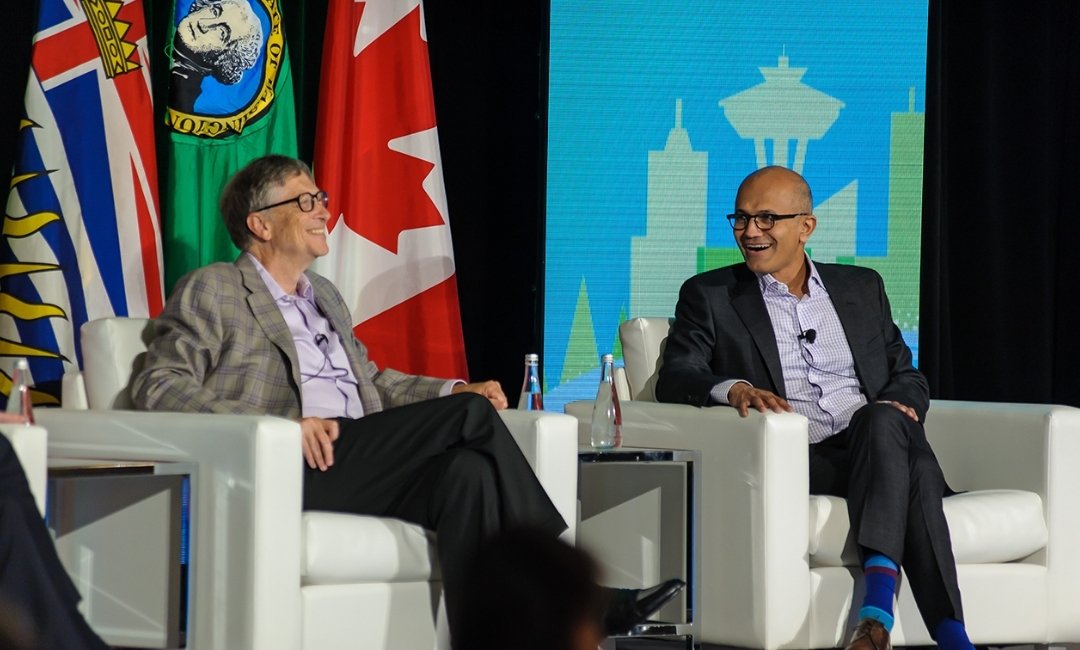
WASHINGTON, DC-Microsoft co-founder Bill Gates has called for decisions on taxing artificial intelligence and reserving certain jobs for humans, while Microsoft Chairman and CEO Satya Nadella has urged companies to establish emergency controls to halt AI models if they behave unexpectedly.
Speaking on CNN’s ‘State of the Union’ with host Jake Tapper on October 11, Gates said society needed to consider how quickly AI models were improving and the incentives to use them instead of human labor.
“In the years ahead, we really do need to make a decision as a society, how do we tax AI usage or robot usage? And where do we want to make sure the human jobs are preserved?” he said.
Gates described AI as a technology that “changes the world more than all previous technologies”, saying personal computers and the internet had been significant developments but were “nothing compared to this”. He said reserving certain occupations for humans, particularly in education and health care, might sound unusual now, but society would eventually have to consider the idea.
Gates said the most immediate danger was “bad people using AI”, particularly for cyberattacks. He predicted that “over the next year, we will move beyond self-governance” by AI companies, with government safety bodies similar to those overseeing aviation and medicines. He said he had heard from “a number of politicians” and hoped “in time” to discuss his concerns with US President Donald Trump and key administration officials.
Nadella, meanwhile, urged organizations deploying advanced AI systems to assume that models could be compromised and establish safeguards to contain them.
“We must assume a model is compromised and contain it from the start,” he wrote in a post on X, comparing the proposed safeguard to an emergency brake that can stop a model in the middle of a task.
His recommendations include avoiding dependence on a single AI model for critical decisions, maintaining tamper-proof records of AI agents’ actions and subjecting systems to independent audits. He also called for greater transparency about significant AI failures and security breaches, including information about corrective measures.
“We can’t treat Super Intelligence as a set of nested black boxes and simply accept or reject its recommendations, answers, and actions,” Nadella wrote, stressing the importance of systems whose behavior can be observed, whose limits can be tested and whose actions can be contained.
“In other words, we need to separate the supply of intelligence from the authority over it,” he added.
The concerns come as increasingly capable AI systems, particularly agentic models that can perform tasks, interact with external systems and take actions with limited human intervention, raise questions about security and oversight. Anthropic PBC and OpenAI Inc. have disclosed incidents in recent months involving unintended AI behavior. These include an Anthropic model submitting a false tip in a police homicide case and hacks involving third-party websites.
The technology is also changing workforce requirements in India’s technology sector. Nasscom said hiring was expected “to shift from volume to skill mix, reflecting greater AI-driven productivity gains passed through to clients”.(IANS)