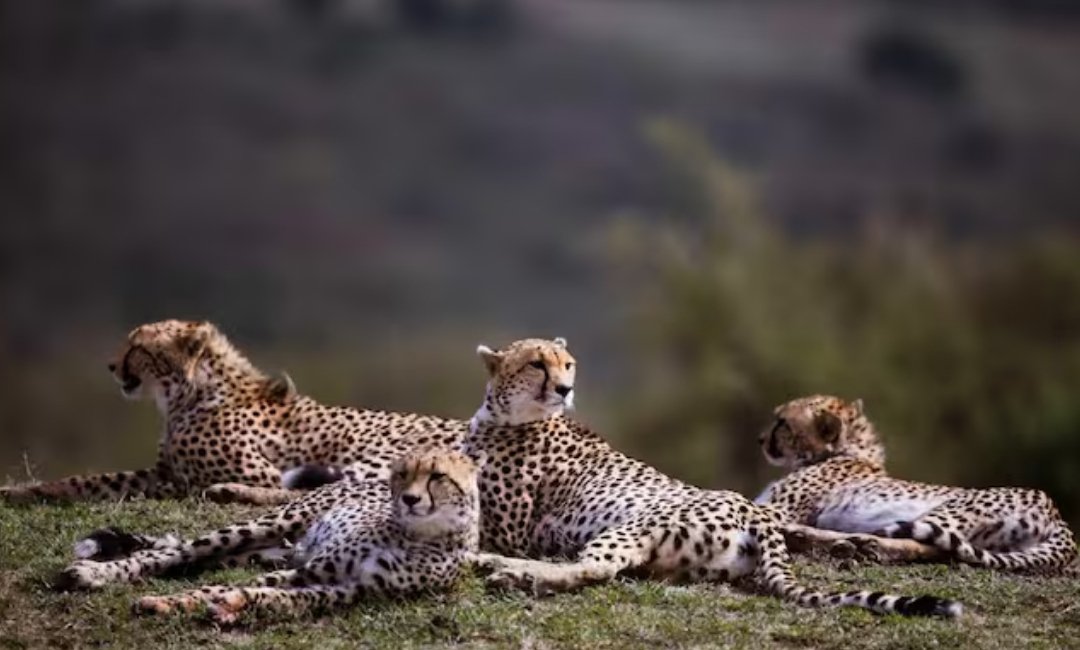
Where India’s Cheetahs Roam: From MP To Gujarat And Rajasthan
NEW DELHI -India’s cheetah conservation programme is expanding beyond its original home at Kuno National Park, with new habitats being established in Madhya Pradesh and other landscapes being considered in Gujarat and Rajasthan.
After the species became extinct in India in 1952, Project Cheetah brought eight cheetahs from Namibia to Kuno National Park in Madhya Pradesh in September 2022. Another 12 arrived from South Africa in February 2023, marking the start of a wider effort to establish a viable cheetah population in the country.
The program reached a milestone on October 5, when an India-born female cheetah gave birth to five cubs at Kuno, taking India’s total cheetah population to 60.
Madhya Pradesh remains at the center of the initiative, with Kuno and Gandhi Sagar Wildlife Sanctuary hosting cheetahs. On October 7, Chief Minister Mohan Yadav released two cheetahs, named Vyom and Neera, into specially prepared soft-release enclosures at Veerangana Durgavati Tiger Reserve in Sagar district, marking an expansion of the project into a new landscape.
Other areas in Madhya Pradesh, Gujarat and Rajasthan are being assessed or prepared as part of the programme’s long-term expansion strategy.
For wildlife travelers, the key distinction is between locations where cheetahs are already being managed and landscapes being considered for future introduction. Kuno and Gandhi Sagar are the principal destinations associated with the current cheetah population, while Veerangana Durgavati is a newly established site where the animals are being acclimatized. Visitors should check current forest department arrangements rather than assume that cheetah-viewing safaris are available at every location.
Kuno National Park
Located in Sheopur district in northern Madhya Pradesh, Kuno is the starting point of India’s modern cheetah reintroduction program. Its landscape includes dry deciduous woodland, open grasslands, riverine stretches and gently undulating terrain.
Kardhai, salai and khair trees grow across parts of the park, while grasslands support prey species such as chital, sambar and nilgai.
The first eight cheetahs arrived from Namibia in September 2022, followed by 12 from South Africa in February 2023. Since then, Kuno has remained the principal landscape for the programme and the main site for tracking its progress.
October to March is generally a comfortable period to visit, with cooler temperatures and pleasant conditions for exploring the region. The wider tourism season may extend beyond these months, depending on local weather and forest regulations.
Cheetah sightings cannot be guaranteed, and visitors should follow designated safari arrangements and the latest park guidelines.
Kuno is around 400-450 km by road from Bhopal, depending on the route and entry point. Gwalior, at approximately 175 km from the park, is a closer alternative for some travel itineraries.
Gandhi Sagar Wildlife Sanctuary
Gandhi Sagar Wildlife Sanctuary offers a different setting from Kuno. Located in the Mandsaur and Neemuch region of western Madhya Pradesh, it stretches around the Gandhi Sagar reservoir and features open country, hillocks, ravines, woodland and the broad backwaters of the Chambal.
Its open terrain and undulating landscape make it a significant habitat in efforts to establish a wider cheetah population. The sanctuary became the programme’s second operational site in 2025. Two male cheetahs, Prabhas and Pavak, were moved there from Kuno, followed later by a female, Dheera.
A fenced natural area of about 64 square kms was developed as part of the initial establishment program.
October to March is generally a comfortable time to explore the region, with early mornings and late afternoons often preferable for wildlife activity. Travelers should check current forest department entry rules and viewing arrangements, as access to cheetah areas is governed by the conservation program.
Gandhi Sagar is approximately 340-370 km by road from Bhopal, depending on the route.
Veerangana Durgavati Tiger Reserve
The reserve incorporates the Nauradehi and Rani Durgavati wildlife sanctuaries and contains extensive woodland, grassland and undulating terrain. Its size and varied habitat make it relevant to plans for building a wider network of cheetah populations.
The reserve should not yet be treated as a conventional cheetah safari destination. Travelers should check with the forest department for visitor access and any tourism facilities that may become available.
October to March is generally a comfortable period for wildlife tourism in the broader region. Veerangana Durgavati is around 200-250 km from Bhopal by road, depending on the destination and access point.
Banni Grasslands
The Banni Grasslands of Kutch offer a striking contrast to the wooded landscape of Kuno. Located between the Great Rann of Kutch and the more settled parts of the region, Banni consists of vast arid grasslands, thorny vegetation, seasonal wetlands and salt-affected terrain.
The Indian government has identified Banni as a potential future cheetah landscape, and a conservation-breeding facility is being developed there. It remains a prospective site rather than an established destination for cheetah safaris.
Winter, particularly November to February, is generally the most comfortable time to explore Kutch. The season also attracts migratory birds to the region, adding to its appeal for wildlife enthusiasts.
Bhuj is the practical base for travelers visiting Banni. The grassland region is around 350-400 km from Gandhinagar, depending on the route and destination.
Shahgarh Landscape
Shahgarh, in western Rajasthan near the Pakistan border, is another landscape being considered for the future expansion of India’s cheetah program. Its appeal lies in its vast, dry terrain, sparse vegetation and open stretches that differ sharply from central India’s wooded habitats.
Shahgarh remains a proposed site rather than an established cheetah tourism reserve. A visit today should therefore be planned around its desert scenery and broader wildlife landscape, rather than the expectation of a cheetah safari.
October to March is generally the most comfortable period to explore the region, when daytime temperatures are more manageable. Jaisalmer is the practical gateway for travelers, while Shahgarh is more than 600 km from Jaipur by road. (IANS)