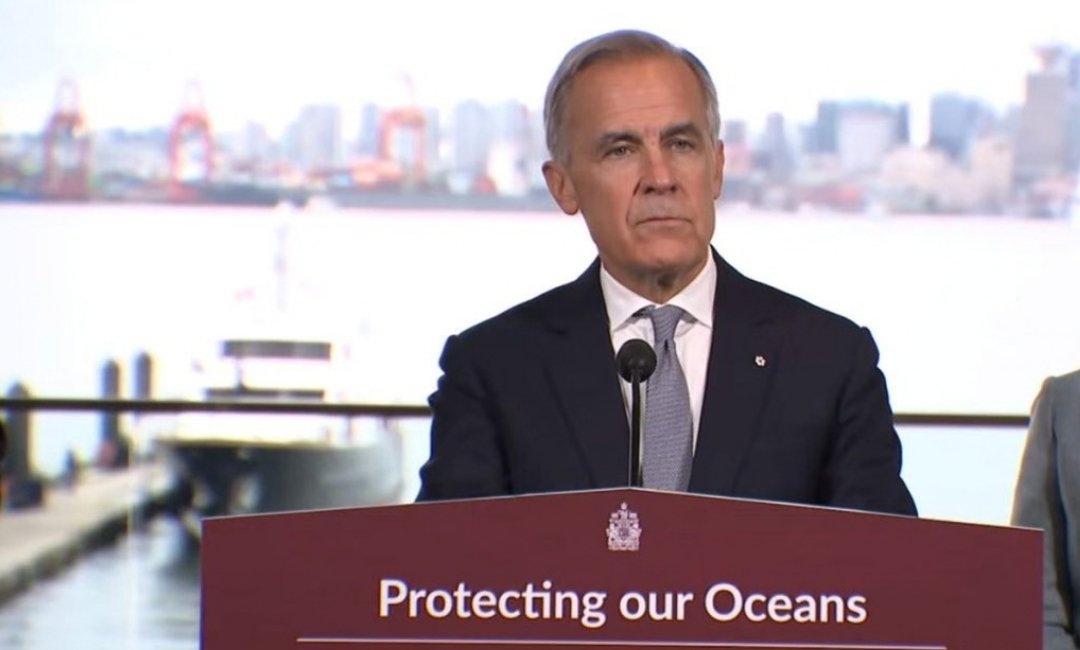
Canada Unveils $1.2 Billion Plan To Protect Its Coastline
OTTAWA – Canada has announced a C$1.2 billion investment to protect its oceans as it expands ports, shipping infrastructure and energy exports along its Pacific coast.
Prime Minister Mark Carney said the program would strengthen marine monitoring, scientific research, ecosystem protection and the country’s ability to respond to accidents and other emergencies at sea.
The investment is part of a national ocean strategy that Ottawa says will combine environmental protection with trade diversification and economic development.
Canada is expanding strategic infrastructure along its western coast, including the Port of Vancouver and the proposed Roberts Bank Terminal 2. The government says the projects will increase trade capacity and reduce Canada’s economic dependence on the United States, while also placing additional pressure on marine ecosystems.
“The further we reach in our ambitions, the greater our responsibility to protect what we have inherited,” Carney said.
“So as we build our economy, we are conserving our environment through one integrated plan. We can and will do both,” he said.
“We will build major infrastructure, diversify our trade, and create hundreds of thousands of jobs – safely, responsibly, and in ways that protect our oceans for generations to come,” Carney said.
The measures will expand monitoring systems and provide new tools for officials responsible for protecting coastlines, marine habitats and fisheries. They will also strengthen Canada’s preparedness for oil spills, shipping accidents and other marine incidents.
Transport Minister Steven MacKinnon said safe shipping systems were essential to both environmental protection and reliable supply chains.
“Canada’s oceans are vital to our communities, our economy, and our way of life,” MacKinnon said.
“Together, we are building a safer marine transportation system that supports communities, safeguards our oceans for future generations, and keeps Canada’s supply chains moving reliably and sustainably,” he said.
Canada has the world’s longest coastline and borders the Atlantic, Pacific and Arctic oceans. Its marine territory is central to shipping, fisheries, energy development, sovereignty and national security.
The Arctic is warming at more than four times the global rate, according to the Canadian government, increasing the importance of ocean observation and climate forecasting.
Canada’s Pacific ports provide some of the country’s shortest maritime connections to India and other Asian markets. Ottawa’s efforts to expand trade with India could increase the commercial importance of those routes as both countries negotiate a comprehensive economic partnership agreement. (IANS)