
How A Mother’s Recipe Book In Agra Created A Family Legacy Of Writers In California
By Prachi Sharma
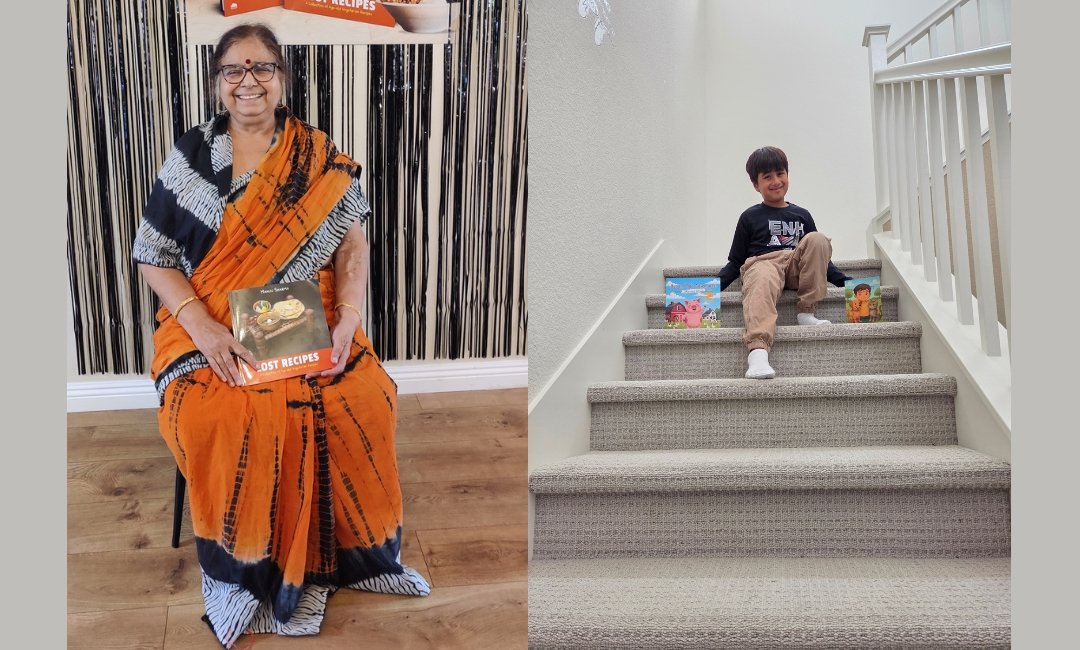
SAN RAMON – The last book my mother wrote sits on a shelf between two picture books by my six-year-old son. She never met him as an author. She died four years before his first book came out.
My mother, Manju Sharma, grew up in Agra. She never trained as a chef or a writer. She was a homemaker who cooked, and who understood, somewhere quietly, that the recipes handed down through her mother and grandmother were vanishing. Nobody was writing them down. The women who cooked them were leaving, one by one, and taking with them dishes that had crossed generations and would not survive one more without help.
So, she began writing them down. Not for a publisher, not for a market, but for us. For her four children. She called the book ‘The Lost Recipes’, and she finished it after years on dialysis and a kidney transplant in 2016 that gave her six more years. She died in 2022, in Doiwala, a small town outside Dehradun, before she could see what her small act of preservation would do to the rest of us.
Because here is what has happened since.
My sister Richa wrote a novel, ‘Finding Home Again’. And I wrote two books. The first, ‘Manju: A Life of Grit, Grace and Greatness’, is a children’s short-story collection about my mother and is not a novel, but a book my son can read when he is older and know who she was. My brother Mohit, one of the leading graphic design professionals in India, oversaw the illustrations. The second, ‘Paws Around the World’, is a children’s book about our rescue dog Oreo.
And then something I could not have predicted happened.
My son Ayansh, at five, wrote a book. It is called ‘Tag, You’re It!’ and it is about a game of tag and friendship. At six, he wrote his second book, ‘Hungry Pig’s Adventures!’ His cousin Reyansh wrote a book too, ‘The Super Secrets’, about four superheroes and how they save the world. Three books, by two boys, in the space of a year.
I did not push them. I could not have. What I could do was make it easy. We started a small imprint, ‘The Sapling Press,’ to publish their books properly. A softcover print copy for the child who wrote it, more on request for family, and PDF editions that any parent can buy and read with their own child. Not to sell thousands, but to give my son and nephew what my mother gave herself: the dignity of a finished book, and the chance to inspire other children to write one too.
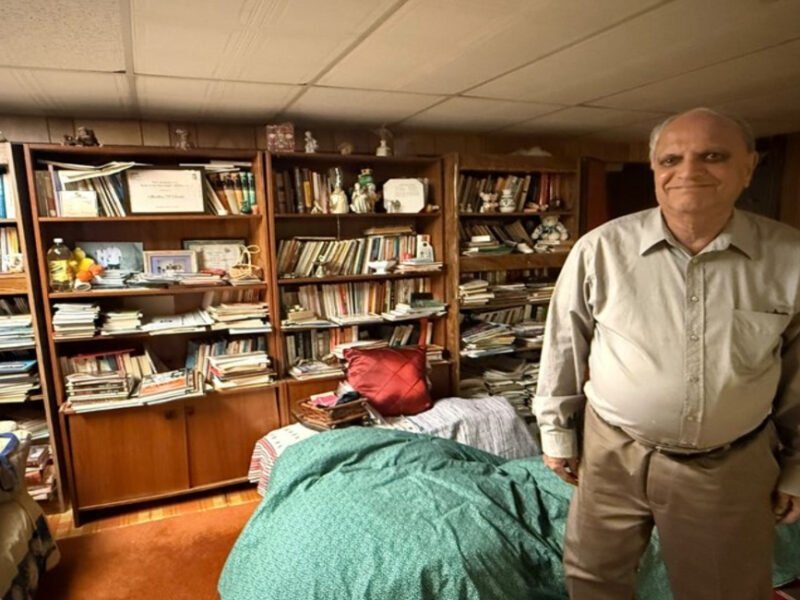
The story I told KQED Perspectives this month is really the story of three generations that wrote things down when the world told them they didn’t have to. My father, Satya Prakash, was a schoolteacher in a small town in Arunachal Pradesh, the same schools where my mother also taught. He is writing his own memoir now, in his seventies. A family that, when I was growing up, owned exactly one bookshelf.
Something else happens in a diaspora family that I didn’t understand until my own children were born. The grandparents in India become people in photographs. The stories thin out. The recipes are approximations of approximations. My mother’s book gave my son something most children of Indian immigrants lose: a direct, undiluted line back to the woman who fed her family in Agra. He cannot cook from it yet. But he knows it exists. He knows she wrote it for him.
None of this was planned. None of it was a strategy. It began with my mother deciding that a recipe for a dish nobody in Agra remembered anymore was worth the effort of writing down. She wrote it because she loved us. Everything else, my sister’s novel, my books, my son’s picture books, my nephew’s superhero story, my father’s memoir-in-progress, is the shape her love took after she was gone.
My son will be reading from his books at a public library in the East Bay soon. He is six. He will not remember his grandmother the way I do. But he will remember, I think, that she is the reason he is sitting in that chair.
Small-town Agra to California. A homemaker’s cookbook to a six-year-old’s picture books. Two continents, three generations, one act of writing something down.
That is the story. She started it.

Olivia Parker
/
What a beautiful and heartfelt story. It’s inspiring to see how one mother’s recipe book became a legacy across generations.
July 30, 2026Sophia Mitchell
/
Wonderful read! Stories like this remind us that even simple acts of love can create a lasting impact for families around the world.
July 30, 2026