
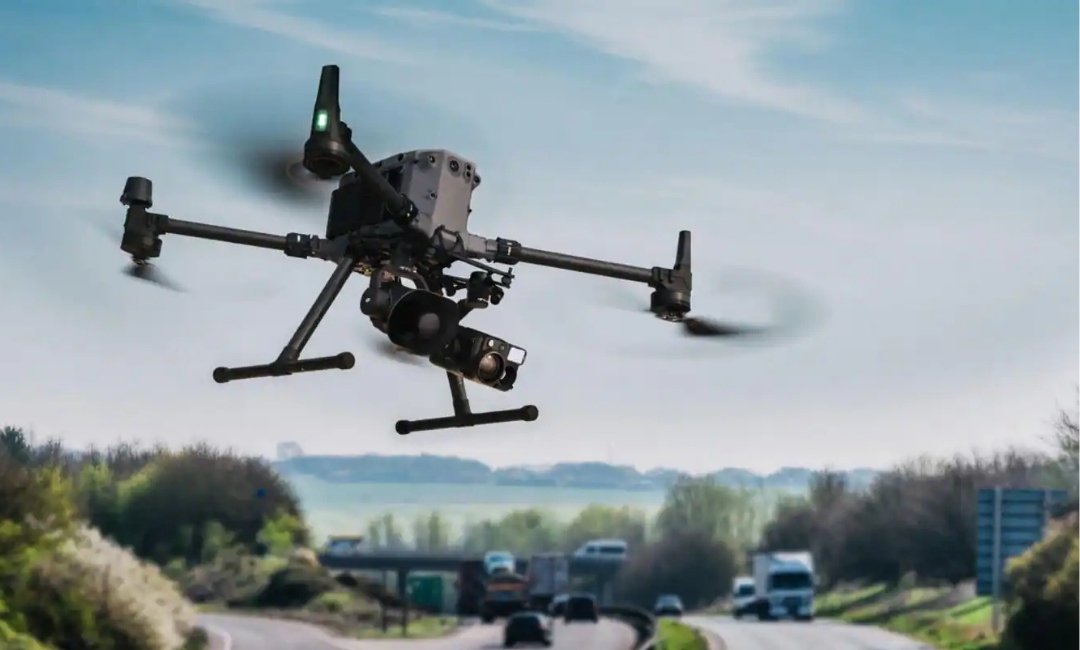
Indian Drones Slapped With Higher Tariffs By Trump
WASHINGTON, DC-Indian drone products have been left outside a preferential US tariff regime that gives selected trading partners lower rates, potentially subjecting India-made unmanned aircraft and components to duties of up to 100 per cent.
President Donald Trump signed the proclamation on August 13 to address what the White House described as a national security threat arising from US dependence on imported drones and components. The measure does not impose an India-specific tariff, but India is absent from the group whose qualifying products will receive lower rates.
Eligible drones and components from the European Union, Japan, Liechtenstein, South Korea, Switzerland and Taiwan will face a maximum tariff of 15 per cent. Qualifying British products will be subject to a maximum rate of 10 per cent.
The concessions will apply only when substantially all critical components and technology originate in the United States or one of the listed partner economies. The US Commerce Department will determine whether individual products meet the requirements.
Unless they qualify for another exemption or an approved onshoring arrangement, affected Indian products would face the general tariff rates based on their weight, capabilities and classification.
A 100 per cent tariff will apply to drones weighing more than 25 kilograms, drones fitted with thermal imaging, docking stations and certain critical components. Specified parts used in larger drones will also face the higher rate. The annexes provide exceptions for parts intended for retail delivery, agriculture or sale to the Department of War.
Smaller drones weighing 25 kilograms or less and lacking thermal imaging will face a 25 per cent duty. The main tariffs will take effect on September 3.
Certain additional drone components will face a 25 per cent tariff from February 9, 2027. The delayed implementation is intended to give domestic production time to expand. The duties will generally be imposed in addition to other applicable tariffs, taxes, fees and charges.
Products on specified Department of War and Federal Communications Commission-approved lists will receive a 180-day delay. The US Commerce Secretary may also add components to the tariff regime if their imports are found to threaten national security or undermine the new measures.
The proclamation offers another route for Indian companies prepared to invest in US manufacturing. It authorizes an onshoring program for companies building, refurbishing or expanding American facilities.
Approved companies may import covered products, supply-chain inputs and necessary production equipment without paying the new Section 232 duties while their facilities are under construction. Their plans must include a commitment for construction to occur before January 20, 2029.
The US Commerce Department’s investigation found that the United States relied heavily on foreign suppliers for motors, electronic speed controllers, lithium-ion batteries and docking stations. It also cited the risk that software in imported drones could transmit data to overseas manufacturers. (IANS)
Gideon
/
Grit king is hoping for a payout – what a scam.
August 14, 2026