Ladakh’s Sea Buckthorn: A Golden Berry Bursting With Potential
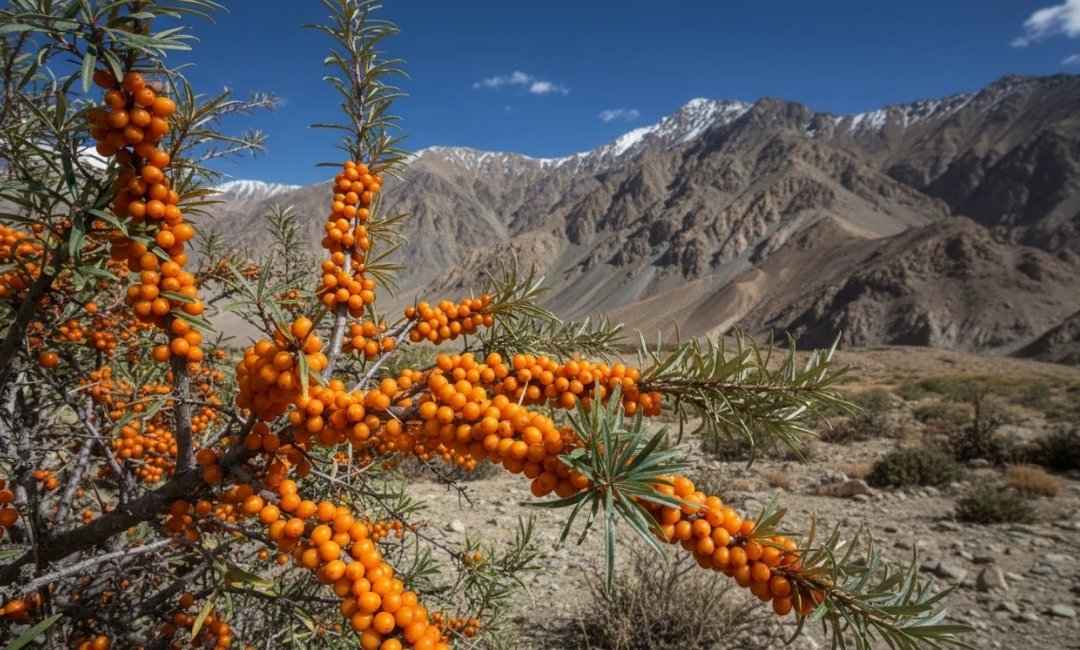
LEH: Known locally as the Ladakh Berry or Tsesta Lulu, sea buckthorn is a wild, high-altitude berry with significant nutritional value and the potential to strengthen local livelihoods and expand into global markets.
The sea buckthorn of Ladakh received a Geographical Indication (GI) tag in 2023, recognizing its regional identity. However, despite its nutritional profile and growing range of processed products, the berry has yet to make a significant mark in international markets.
Ladakh accounts for an estimated 64 to 70 per cent of India’s sea buckthorn cultivation and wild growth area. The hardy shrub grows across Leh, Nubra, Kargil and Zanskar, particularly along the Indus and Shyok rivers, in the cold, dry high-altitude deserts of the Himalayas.
Growing at altitudes exceeding 3,000 meters, sea buckthorn can withstand temperatures ranging from minus 30 to 30 degrees Celsius. Its deep root system also helps conserve soil and control land degradation, adding to its ecological importance in the fragile Himalayan landscape.
The berry is valued for its nutritional composition, containing vitamin C and all four Omega fatty acids — Omega-3, Omega-6, Omega-7 and Omega-9. It also contains flavonoids, beta-carotene, antioxidants, amino acids and vitamins A, E and K.
Traditionally used in Tibetan and Ladakhi medicine, sea buckthorn is now processed into a variety of products, including juices, pulp concentrates, jams, teas, chutneys, nutraceuticals, facial serums and cold-pressed oils. This range of applications offers opportunities to move beyond raw berry sales and develop products with greater value addition.
Local enterprises, including women-led businesses and startups, are processing the berry into marketable products. Their efforts could help create livelihood opportunities, encourage local entrepreneurship and improve access to wider markets.(IANS)