Trump Continues War On California And Its Climate Leadership
India-West News Desk
WASHINGTON, DC – The Trump administration is escalating its fight with California over the state’s environmental policies, challenging its climate partnerships, targeting regulations and moving to open protected forest lands to logging and road construction.
California has long pursued some of the nation’s most aggressive climate and conservation policies and has built partnerships with governments and regions around the world. Under President Donald Trump, the federal government has moved in the opposite direction, seeking to expand fossil fuel production, loosen environmental regulations and roll back protections on public lands. With calculation, Trump has systematically undone every regulation set by the Biden administration.
That conflict intensified this week on two fronts.
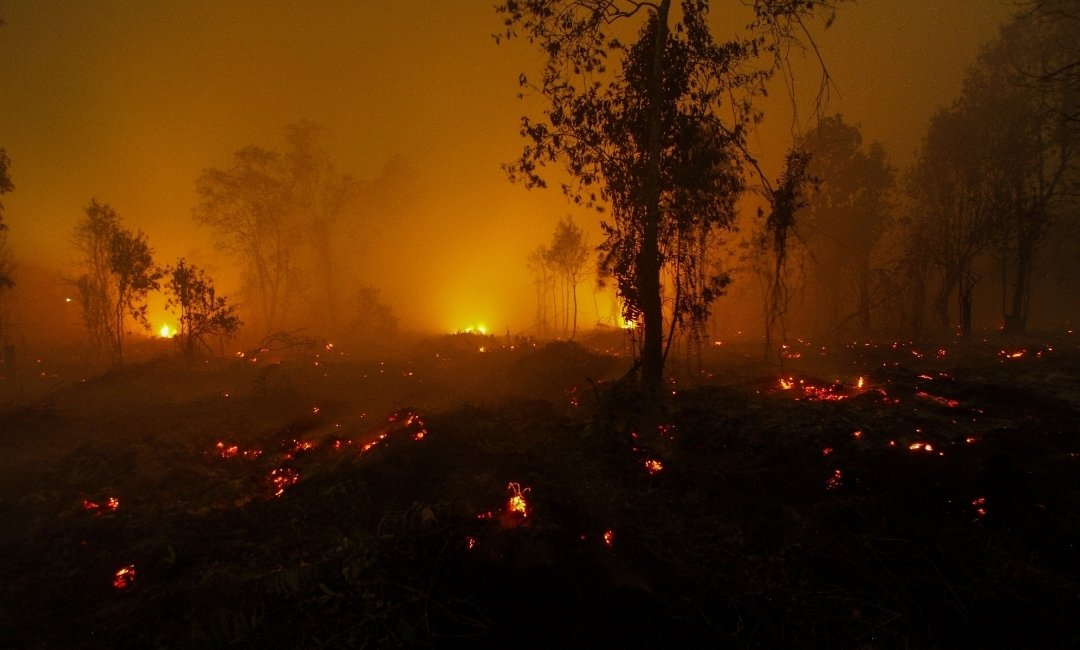
The U.S. Forest Service on August 18 proposed rescinding the 2001 Roadless Area Conservation Rule, which protects millions of acres of undeveloped national forest land from most road construction and commercial logging. The proposal would affect more than 4 million acres of roadless forest in California. The administration says eliminating the rule would give local forest managers greater flexibility to reduce wildfire risks and address forest health.
California environmental officials and other critics argue that opening remote forests to roads could instead increase wildfire risks. Research by the Forest Service cited by CalMatters found that nearly two-thirds of human-caused fires mapped along roads in four Southern California national forests occurred along roadsides. A broader study has also found that wildfire ignition densities are substantially higher near roads than in roadless and wilderness areas.
California Natural Resources Secretary Wade Crowfoot has argued that the roadless protections have not prevented the state from carrying out forest treatments to reduce wildfire risks. He has warned that allowing more construction, timber harvesting and mining in remote areas could increase fire risks and firefighting costs.
The administration’s move comes as part of President Trump’s broader push to increase timber production on federal lands. Critics see the rollback as another example of the administration prioritizing development and resource extraction over conservation.
At the same time, Republican lawmakers, mostly aligned with Trump, are seeking to turn California’s international climate partnerships into a federal investigation.
Senators Rick Scott, Mike Lee and Marsha Blackburn, along with Representative Young Kim, have asked Attorney General Todd Blanche and Secretary of State Marco Rubio to investigate California’s climate agreements with Chinese government-linked institutions. They allege that California may have crossed constitutional limits on state involvement in foreign affairs.
The lawmakers pointed to agreements dating back to former Governor Jerry Brown’s administration, including a 2013 memorandum involving cooperation with China on carbon reduction, emissions trading and electric vehicles. They also cited partnerships involving California’s Air Resources Board, the University of California system and Chinese research institutions.
Their letter specifically raised questions about a 2015 agreement between the University of California and Tsinghua University, as well as the California-China Climate Institute established at the University of California, Berkeley. They also cited Brown’s 2017 trip to Beijing after Trump announced the first U.S. withdrawal from the Paris climate agreement and Governor Gavin Newsom’s 2023 meeting with Chinese President Xi Jinping.
The Republicans are asking the Justice Department to examine whether California’s arrangements violate the Constitution’s restrictions on states entering agreements with foreign powers. They also requested a Foreign Agents Registration Act review, an FBI counterintelligence assessment and an examination of technology transfers involving batteries, electric vehicles, hydrogen, offshore wind and electricity-grid software.
The investigation request places California’s climate diplomacy at the center of a larger political and constitutional fight between the state and the Trump administration.
California has increasingly presented itself as a counterweight to Washington on climate policy. After Trump’s withdrawal from the Paris Agreement, the state expanded its international climate partnerships and helped build the U.S. Climate Alliance. In April, California joined the International Union for Conservation of Nature, becoming the largest U.S. subnational government to join the global conservation organization. The state has also continued climate cooperation with governments and regions in Europe, Latin America and the Pacific.
That role has given California an influence beyond its borders at a time when federal climate policy has shifted sharply. The state has argued that its environmental standards can serve as a model for other governments and that its large economy gives its policies global significance.
The Trump administration, however, has increasingly challenged that model.
California has sued the federal government over environmental rollbacks, including a July challenge to an EPA rule weakening restrictions on hydrofluorocarbons, powerful greenhouse gases. The state is also fighting a federal review of its Coastal Management Program, which California officials say could weaken the state’s ability to protect its coastline while facilitating offshore oil and gas development. (with IANS)