650-Year-Old Chinar In Kashmir Among Asia’s Oldest
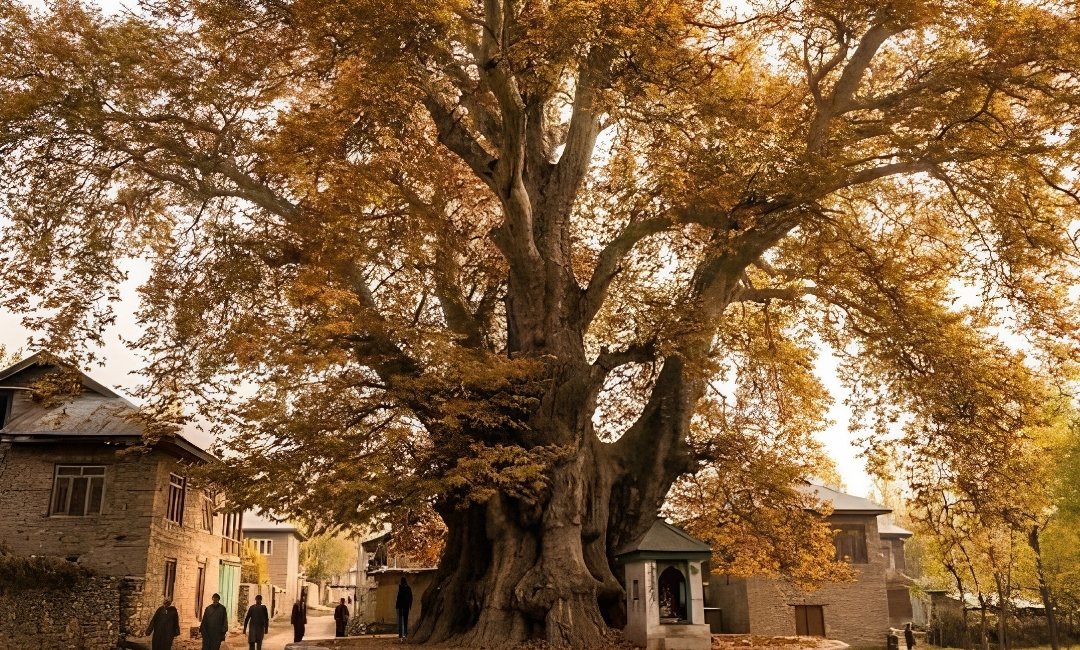
SRINAGAR-A 650-year-old Chinar tree in Chattergam village of Jammu and Kashmir’s Budgam district is among the oldest of its species in Asia.
The Forest, Ecology and Environment Department said some of the tree’s older, dried branches had fallen naturally, while the remaining portion continues to remain green. An iron fence has been installed around its critical root zone to prevent soil compaction and root suffocation and to restrict vehicular movement around the heritage tree.
Under existing regulations, cutting even a single branch of a Chinar requires prior permission from the local administration. Hammering nails into the trees, putting up signboards, carving the bark, or damaging the bark and roots are also prohibited.
The decline in Chinar numbers across Kashmir has been attributed to natural ageing, diseases and pest attacks, felling for developmental activities, shrinking land availability and population growth.
The Jammu and Kashmir government has also undertaken a comprehensive census and geo-tagging exercise covering tens of thousands of Chinar trees, giving each a unique digital identity to help monitor its health and support conservation efforts.
The Chinar, locally known as ‘Booni’, is the state tree of Jammu and Kashmir and an important part of the region’s cultural heritage, known for its expansive canopy and fiery red autumn leaves. The species, Platanus orientalis, can grow up to 30 meters tall and takes around 150 years to reach full size.
Chinars were widely planted and popularized across the Kashmir Valley during the Mughal era, including under emperors Akbar and Jahangir. The trees feature prominently in Kashmiri art, papier-mâché crafts and literature and are found around historical shrines and Mughal gardens. (IANS)