India Caught Between West, China; US Media Spotlights India’s Balancing Act At BRICS
WASHINGTON, DC-Major US newspapers have portrayed the BRICS summit in New Delhi as a window into a changing global order shaped by strained alliances, regional wars and growing competition between Washington and Beijing.
The New York Times, in a news dispatch, said the central question at the summit was whether Prime Minister Narendra Modi or Chinese President Xi Jinping would emerge as the more influential voice of the developing world.
China sees BRICS as a vehicle for challenging American power, while India wants the group to remain broad enough to avoid forcing countries to choose between competing blocs.
The newspaper said wars, high energy prices, US tariffs and concerns about artificial intelligence were prompting countries to reconsider their relationships with Washington and Beijing.
“China’s primary concern with India has always been India’s alignment with the United States,” said Yun Sun, director of the China program at the Stimson Center in Washington. “So Beijing certainly would not let the opportunity slide to regain some traction with Delhi.”
Xi’s brief visit was his first to India in seven years. It follows a prolonged downturn in relations after the deadly 2020 border clash and a cautious diplomatic thaw that began in 2024.
Xi is scheduled to meet President Donald Trump at the White House on September 24, giving the New Delhi summit added significance as the Chinese leader prepares for high-stakes talks with the US president.
The Wall Street Journal said uncertainty in India’s and China’s relationships with the United States had created space for the two nuclear-armed neighbors to ease tensions.
“India is trying to readjust,” said Srikanth Kondapalli, a professor of Chinese studies at New Delhi’s Jawaharlal Nehru University.
The newspaper said any improvement in India-China relations remained constrained by the unresolved border dispute, China’s close relationship with Pakistan and security competition in the Indian Ocean.
“The Chinese are also seeing that India is biding its time, just working for better options that might emerge,” Sun said. “So I think that adds to the superficiality of the current improvement of China-India relations.”
The Washington Post carried reports describing the summit as a difficult balancing exercise for India.
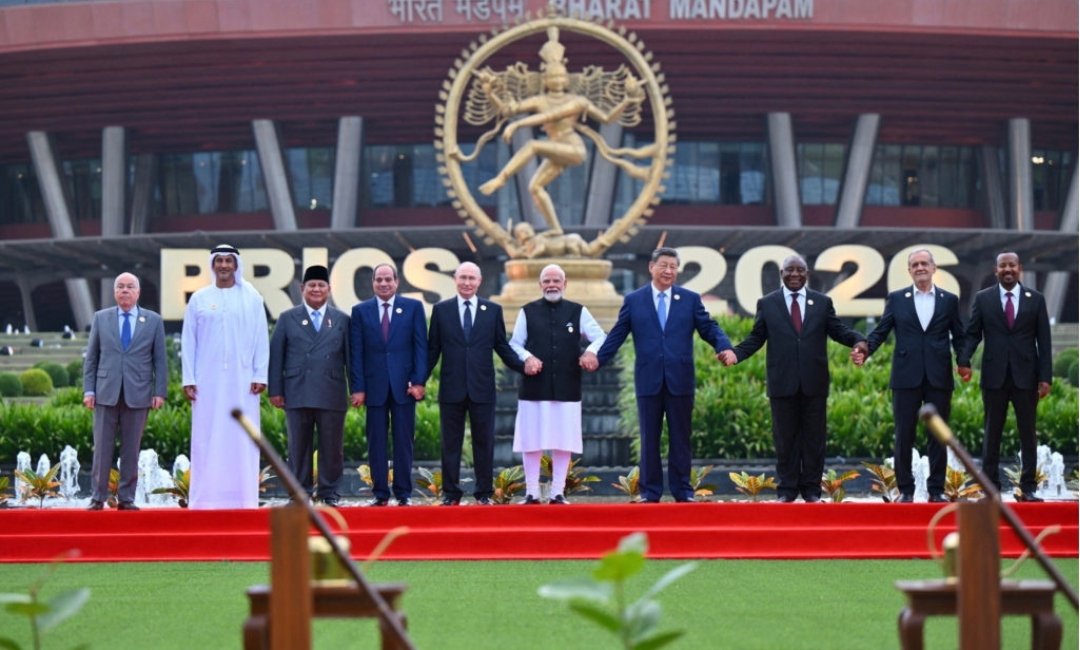
Russian President Vladimir Putin, Iranian President Masoud Pezeshkian and Xi were among the leaders attending the meeting. Prime Minister Modi held separate talks with Putin and Pezeshkian before the summit.
The expanded group’s 11 members want greater influence in the global order but have competing political, economic and foreign policy interests, according to the Post reports.
The wars in Ukraine and the Middle East could expose those differences. India maintains longstanding ties with Russia and Iran while expanding partnerships with the United States, Europe, Japan and Australia. (IANS)