Successive River Blockages Highlight Nepal’s Vulnerability To Climate Disasters
KATHMANDU- Nepal is facing renewed concerns over climate-related disasters as a series of landslides and avalanches have blocked rivers and streams across the country in the past two weeks, following devastating floods in Rasuwa district.
The incidents have highlighted the risks facing Nepal’s mountainous regions, where fragile terrain and changing climatic conditions increase the threat of landslides, avalanches and flooding.
On August 26, an avalanche blocked the Lhendi Khola, a tributary of the Bhotekoshi River, in Rasuwa district near the Nepal-China border. The subsequent flooding caused massive loss of life and property, with 1,369 people dead and 5,132 still unaccounted for as of Sept. 9, according to Nepal’s National Disaster Risk Reduction and Management Authority.
Since then, three separate incidents involving blocked rivers or streams have been reported in Nepal. None resulted in large-scale flooding, as water gradually cleared the landslide debris.
The latest incident occurred in Annapurna Rural Municipality, a remote mountainous area of Kaski district in western Nepal.
On Sept. 8, a landslide temporarily blocked the Kimrung Khola, a tributary of the Modi Khola River, raising concerns about a possible flash flood downstream.
Authorities alerted residents of Nayapul, Birethanti and surrounding settlements downstream, urging them to move to safe locations and take necessary precautions.
On Sept. 9, the National Disaster Risk Reduction and Management Authority said water flow in the Kimrung Khola had returned to normal and there was no major risk of flooding.
“However, as a normal level of risk remains, people are advised to remain alert and exercise caution along the Modi Khola up to the confluence with the Kali Gandaki River,” the authority said.
Kumang Singh Gurung, chief district officer at the District Administration Office in Kaski, said the alert was issued after shepherds reported that the stream had been blocked near Annapurna South.
“The landslide blocked the upper section of the Kimrung Khola,” he said.
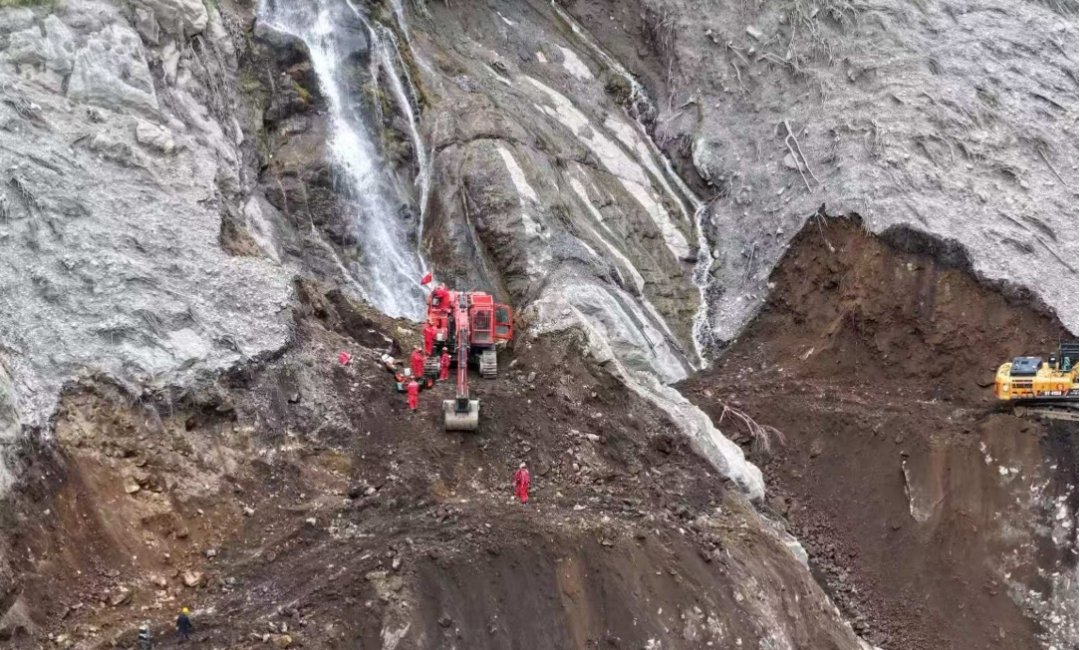
On September 4, the Chameliya River, a tributary of the Mahakali River that forms part of the Nepal-India boundary, was partially blocked at Bhattar in Apihimal Rural Municipality of Darchula district because of continuous landslides.
The landslides occurred from the morning of September 4 until the afternoon, prompting the District Administration Office in Darchula to alert residents living along the banks of the Chameliya, locally known as the Chaulani River.
The administration warned that the river could become completely blocked, potentially posing a serious risk to downstream settlements. It urged residents in downstream areas and concerned government agencies to take precautionary measures.
The natural blockage gradually receded, however, reducing the risk of a large-scale disaster similar to the Bhotekoshi flooding in Rasuwa in late August.
On August 31, a landslide at Chaurikharka in the Chhekampar area of Chumnubri Rural Municipality in Gorkha district temporarily blocked the Syar Khola, a tributary of the Budhi Gandaki River.
Although reports circulated that the Budhi Gandaki River itself had been blocked, officials at the District Administration Office in Gorkha dismissed them as false. Officials confirmed that the Syar Khola had been partially blocked, but said the incident did not cause flooding as water gradually cleared the debris.
The series of blockages has underscored the growing disaster risks facing Nepal’s mountainous regions.
Climate change has emerged as a major factor behind the increasing risks of landslides and avalanches, with changing climatic conditions affecting the country’s fragile geology and environment.
“Our mountains are high, steep and fragile, so our level of risk is also relatively high. The risks associated with climate change are particularly serious in our Himalayan and mountain regions,” said Dr. Maheshwar Dhakal, joint secretary and chief of the Climate Change Management Division at Nepal’s Ministry of Forests and Environment.
Dhakal said Nepal needs stronger disaster preparedness and greater coordination among federal, provincial and local governments as climate-related risks increase.
He said the country’s mountainous terrain, expanding settlements and growing infrastructure development make it increasingly important for authorities to identify vulnerable areas and take preventive measures before disasters occur.
“Local governments have to be at the frontline of protecting their citizens,” Dhakal said, stressing the need for local authorities to identify risk-prone areas, alert residents and relocate settlements where necessary.
He also called for greater coordination among government agencies, saying climate-related disaster risks cannot be addressed by a single ministry or level of government. (IANS)