The Met To NYU, Sangeetha Kowsik Uses Art And Design To Connect Faiths, Cultures
India-West News Desk
NEW YORK, NY – By all appearances, Sangeetha Kowsik’s life spans multiple disciplines: she is a Hindu chaplain trained in Islamic calligraphy, the former Head Designer at The Metropolitan Museum of Art, and founder of a multidisciplinary studio that works across art, design, fashion, and beauty to bring communities, cultures, and faiths into conversation.
Born and raised in Fremont, California, Kowsik grew up in a Hindu household deeply connected to temple life. Her father helped build three Hindu temples in the US, including the Ganesha Temple in Flushing, New York, she says. From childhood, she trained in Carnatic and Hindustani vocal music, along with Bharatanatyam, Odissi, and Kathak.
“I grew up understanding that we share more than we differ,” Kowsik says. She recalls that Ali Akbar Khan performed at the groundbreaking ceremony for the Shiva Vishnu Temple in Livermore, while Zakir Hussain hosted Saraswati pujas. “Music, spirituality, and artistic exchange between Hindus and Muslims have always existed,” she says.
After moving to New York City to study at Parsons School of Design, Kowsik built a career across fashion, beauty, luxury, and museums. She worked with brands including Estée Lauder, Ralph Lauren, and DKNY before joining The Metropolitan Museum of Art, where she later became Head Designer.
At the Met, Kowsik became increasingly aware of the lack of diversity and limited understanding of global faiths and cultures in museum spaces. She created an internship and mentorship program for people of color and international students. Her advocacy contributed to internships later becoming fully paid, work that earned her the Rise & Recognize Award from Embrace the Change.
She worked on exhibitions including Alexander McQueen: Savage Beauty and the reopening of the museum’s Islamic galleries. During that time, she studied Arabic calligraphy at New York University under Palestinian calligrapher Majid Saif while designing products for the museum shop.
“Arabic calligraphy is an art form that connects Muslim communities across regions,” Kowsik says. “Wherever you find a Muslim community, you will find Arabic calligraphy.”
NYU later appointed Kowsik as Hindu Chaplain, recognizing her knowledge of Sanskrit, Hindu scripture, and temple traditions. In 2017, she founded the NYU Hindu Center as a space for education, spiritual practice, and interfaith dialogue. Her work was later recognized with “Chaplain of the Year.”
As conversations around faith and identity became more polarized, Kowsik began using art and design to explore connections between Hindu and Muslim traditions. Inspired in part by her friendship with NYU Imam Khalid Latif, she created Arabic calligraphy renderings of Hindu deities, including Lord Ganesha.
That work developed into “Allah Swami,” an interfaith exhibition presented at NYU in 2019. Today, her Arabic calligraphy artwork hangs beside NYU’s mosque.
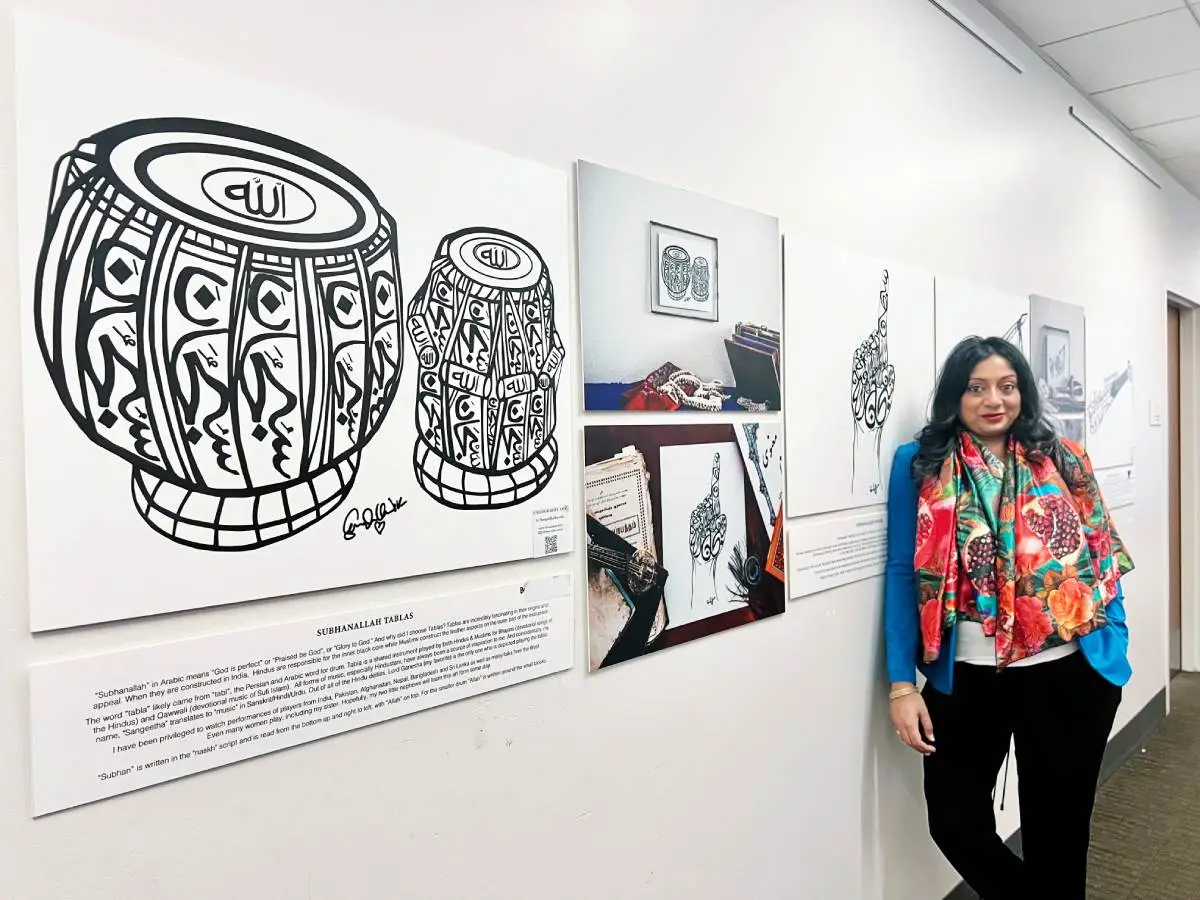
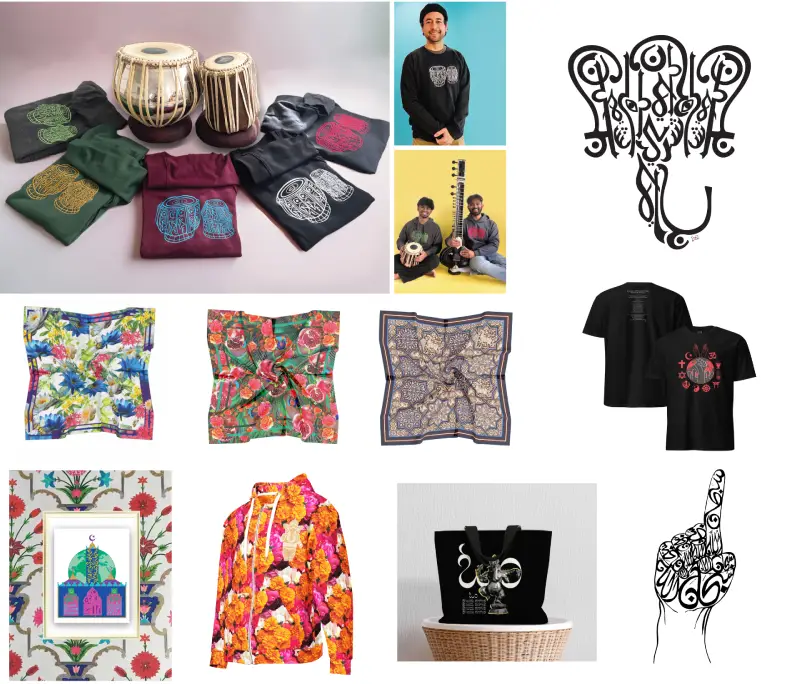
Through her studio, Ihsan Ishan Design, Kowsik creates art, fashion, exhibitions, and products focused on global faiths and cultural histories. Her “Subhanallah Tabla” design draws from the collaborative traditions behind the making of the tabla, with different parts often crafted by Hindu and Muslim artisans. The piece was worn by Zakir Hussain.
Her collections also explore histories across North Africa, Persia, and Mexico. A recent Mexico City collection looks at the marigold flower’s Indigenous Mexican origins and its parallels with South Indian ancestral traditions.
Kowsik says the central idea behind her work remains consistent: using design as a way to create understanding across communities.
On June 23 at 3 p.m., Kowsik returns to the Met to deliver a public talk for the exhibition ‘Household Gods: Hindu Devotional Prints, 1860–1930.’
“It feels full circle,” she says. “I’m returning as a designer, artist, chaplain, and educator, sharing the traditions I care deeply about.”
Discover the latest interviews, releases, literary insights, and stories from book authors followed by readers across Canada.