The Resilience We Lose When We Are The Majority Of The Minority
Image: AI generated
By Ashwath Nityanandan
Some years ago, a geological survey project led me to visit a small San Diego company in a quest for ground-penetrating radar. My trip exposed an unexpected layer of human substrate that had nothing to do with microwave reflections.
It took me a few hours of meetings to make a striking observation. Every one of the people whom I spoke to, save one, was either a first or second-generation immigrant or a minority. The sole exception who looked and sounded like mainstream America was an elderly white male toolmaker.
By the time I noticed this, we were at a group dinner. So, I watched how the outlier interacted with his colleagues. Mr. Jones seemed completely at home while he cut across all the differences that surrounded him. This notably included that of age, as he chatted and kidded vigorously with his millennial peers from Colombia, Iran, Mexico, China and Egypt.
I thought nothing more of this until I made a weekend stop to see a friend closer to Los Angeles. I have known Raj since the day we both landed in graduate school, fresh off the India boat. Our careers intersected in South Carolina and New York, diverging when he went west and I moved to the mid-Atlantic in the late 20th century.
Raj used to see the large entrenched South Asian community of Orange County as not much different from himself. After all, we subcontinental expats have a lot in common, even if some have stayed rooted to a spot while others have moved all over America. But he had recently experienced an eye-opening moment when he joined a few of his Indian pals at a rock performance.
All the concert-goers except Raj had spent their entire expat careers in Southern California, some for several decades. One might think that they would expect a Steve Miller Band event to be full of yelling middle-aged white men. Apparently, they didn’t.
Raj found that his companions became increasingly uncomfortable at being immersed in a sea of Caucasians who all looked alike and sounded alien. They felt out of place being visible minorities; it was something they simply were not used to. They got distracted from enjoying the music. As things became louder, they began to question their own safety. They even talked about getting out of there.
Raj and I compared notes. Having come of age as immigrants east of the Mississippi, we were totally used to being different from our surroundings. The role of an ethnic minority was in our blood, a way of life. He was dumbfounded by the response of his concert cohort, and so was I. But I was equally taken by the discovery that where you grow up, literally or metaphorically, has a profound impact on how you process diversity. Duh.
Mr. Jones exhibited an intermediate stage of cultural adaptation, that of being comfortable in a diverse environment. This is recognized and desired – indeed, most corporate inclusivity training targets this level of awareness. Raj and I, on the other hand, have been unwittingly primed to a higher benchmark, that of Western business travelers who brace themselves for the shock of being stared at in 98% native Japan.
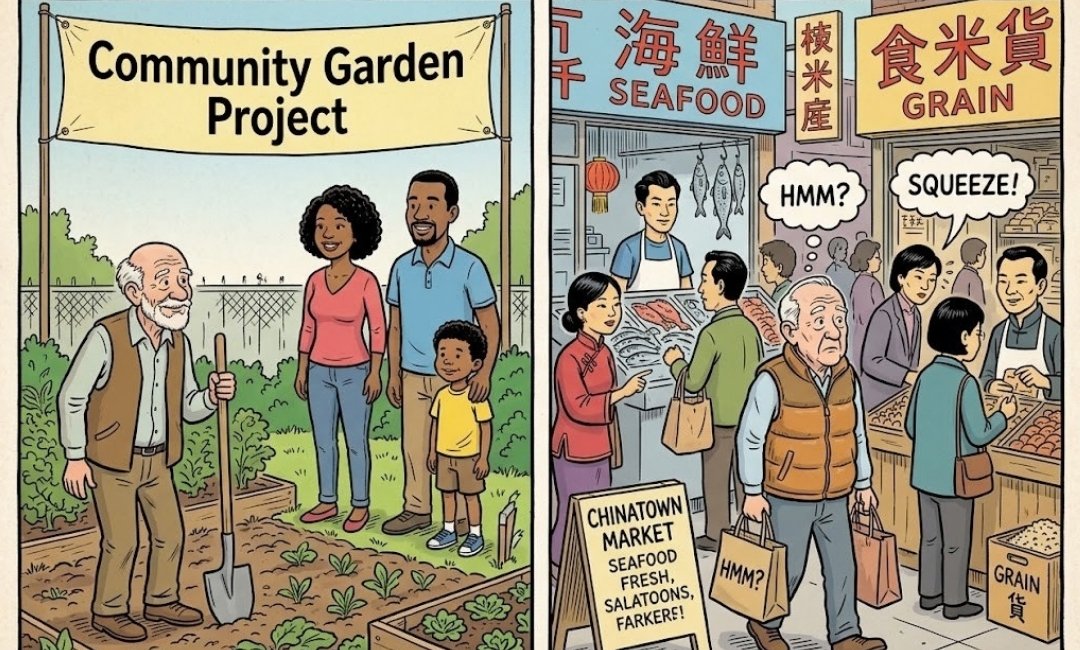
A Wasp at a complex San Diego dinner table faces a milder test than one suddenly crammed into a Yokohama subway car. And a Wasp at church in Kansas City might see diversity as a mere abstraction. I never asked Mr. Jones how he would feel about being the only visiting volunteer in a peaceful all-black community, or standing out as a grocery shopper in Chinatown. Maybe I should have.
We all understand the dark side of homogeneity: it can rob minorities of rights and privileges. One must ask if this is the dark side of diversity that it can eventually rob you of the art of being a comfortable minority. Women engineers have competently been the only girl in the room since the dark ages. Will the day come when they, like Raj’s cocooned friends, can no longer handle the feeling?
(Nityanandan works with automation equipment near Philadelphia. His professional interest is the intersection of human systems and technology, especially in manufacturing.)