Young Indians Flocking To Cockroach Janta Party, Says US Founder Abhijeet Dipke
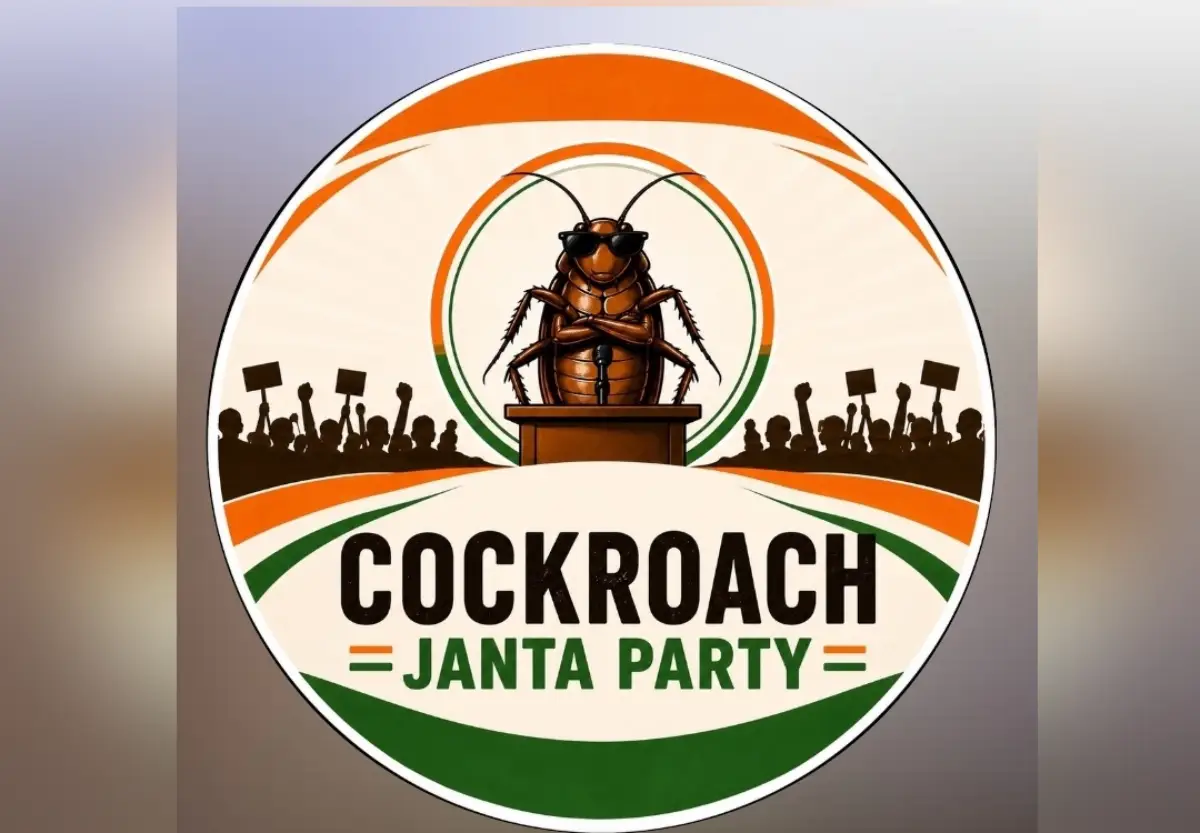
PICTURE CREDIT- Cockroach Janta Party – Instagram
India-West News Desk
CHICAGO, IL – What began as a satirical social media post by Abhijeet Dipke, a Chicago-based Indian communications strategist, has quickly grown into one of the most widely followed online youth movements in India.
Dipke, 30, launched the Cockroach Janta Party earlier this month as a political satire campaign. Within days, its social media presence expanded rapidly, drawing millions of followers and generating discussion across India, according to several media outlets outside India.
Now based in Chicago after moving to the United States two years ago, Dipke said he created the campaign as satire, but its response has reflected something deeper among young Indians facing unemployment, economic pressure, and growing frustration with public institutions.
The movement’s Instagram account drew close to 23 million followers in just a matter of days, with the majority of its audience concentrated in India according to Dipke contradicting what the Indian government said: the followers are from the diaspora and Pakistan. Dipke has told various media outlets that the followers are young, with more than two thirds belonging to Generation Z.
The campaign traces back to a May 16 post on X, where Dipke wrote, “What if all cockroaches come together?” The message came after remarks by India’s Chief Justice Surya Kant, who used the term “cockroaches” while referring to individuals holding fake academic degrees. The comment quickly became a flashpoint online and Dipke turned it into the basis of a broader satirical political identity.
Using a cockroach mascot, sharp humor, and a manifesto written in the language of internet culture, the campaign spread quickly across Instagram and other platforms, amplified by influencers, meme pages, and young users.
Dipke’s background is rooted in communications and public relations. A graduate of Boston University, he said he did not initially expect the campaign to move beyond satire. But as the following grew, so did public expectations around it.
Reuters reported that the movement’s rise has also brought scrutiny. Dipke said he has received threats and faced attempts to compromise his social media accounts. He has also challenged the blocking of his X account in a Delhi court.
The attention has reached India’s political establishment. Leaders from Prime Minister Narendra Modi’s ruling party have publicly criticized the movement, arguing that it undermines democratic institutions and questioning its intent.
For Dipke, however, the campaign’s rapid growth points to a generational shift in how political frustration is being expressed.
Whether it remains an online phenomenon or develops into something more organized remains unclear, Reuters noted.
Read the latest politics news covering government policies, elections, political developments, global affairs, and expert analysis followed by readers across Canada.