Back To The Future: How Ancestral Crops Are Saving Bihar Farmers From Climate Change
By Srijana Karki
Twenty to 25 years ago, finger millet (locally known as Madua) and elephant foot yam (Ol) were an integral part of farming systems and household diets in Jhanjharpur of Madhubani district, Bihar, India. Families regularly consumed millet rotis, and elephant foot yam served as a dependable food source throughout the year. These crops were naturally suited to the local environment—requiring little water, tolerating harsh weather conditions, and providing nutritious food for families.
Over time, however, farming practices began to change. High-yielding hybrid rice varieties entered the market, promising greater production and higher returns. Like many farmers across the region, farmers in Jhanjharpur gradually shifted away from traditional crops and adopted hybrid rice cultivation. In the process, they overlooked the nutritional value, climate resilience, and low-cost nature of millet and elephant foot yam.
Years later, the limitations of this transition became increasingly apparent. Hybrid rice required greater investments in irrigation, fertilizers, and other inputs. As climate change intensified and water became more scarce, cultivation costs continued to rise while farming became more uncertain. The very crops that once seemed to offer prosperity were becoming difficult and expensive to sustain.
This challenge was particularly severe in Jhanjharpur, where communities face recurring floods from the Kamla, Koshi, Gehuman, and Sugarwe rivers. Every year, floods damage crops, livelihoods, and household assets. For Dalit, Mahadalit, extremely marginalized and minority communities, who already struggle to meet basic needs, the combined impacts of flooding and climate change have steadily eroded their resilience and livelihood security.
During discussions with farmer groups, one observation stood out. The area was dominated by rice and wheat cultivation, but after wheat harvests and before transplanting rice, the fields remained unused for nearly 60 to 90 days each year. This represented an untapped opportunity. Through monthly group meetings, the farmers and World Neighbors and partner staff explored options for making productive use of this idle period. Among various suggestions, one idea resonated strongly: bringing back millet cultivation.
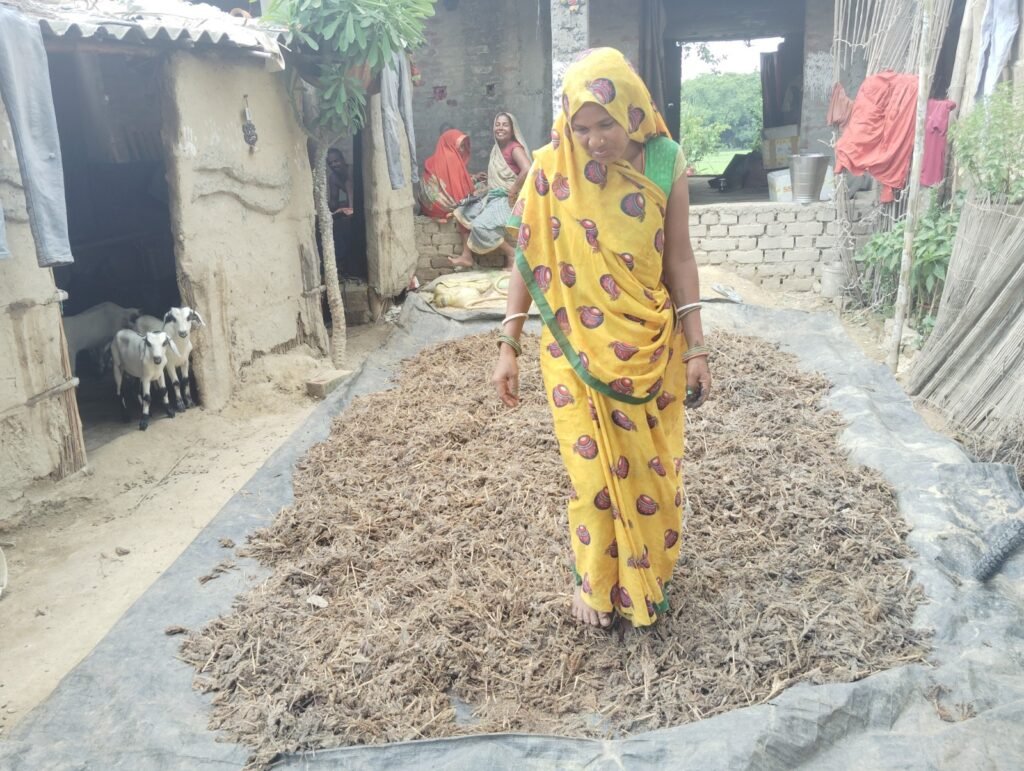
Finger millet had once been a common crop in the area. Almost every household cultivated it on a portion of their land. However, changing weather patterns, increasing focus on commercial crops, and shifting agricultural practices had gradually pushed millet toward local extinction.
Recognizing its potential, the farmer group consulted the Bihar Department of Agriculture and the Krishi Vigyan Kendra. The discussions were encouraging. At the same time, both the Government of India and the Government of Bihar were actively promoting millets because of their nutritional and climate-resilient characteristics.
64 farmers received training on millet cultivation in 2024. Initially, many participants worried that growing millet would interfere with rice production. Through demonstrations and training, they learned that millet requires only 60 to 90 days to mature and can be grown between wheat harvests and rice planting. They also discovered that millet requires far less water and significantly lower production costs than rice.
The first year produced encouraging results. Farmers cultivated millet on 5.4 acres of land, producing a total of 5,500 lbs. Household food security increased by an estimated 25 to 35 days. Women farmers observed that incorporating millet residues into the soil improved soil health. Encouraged by these outcomes, farmers preserved seeds for the following season.
Success generated interest across the community. In 2025, the number of farmers cultivating millet increased from 64 to 113. Farmers shared and exchanged seeds among themselves and expanded cultivation to 8.2 acres, producing a little over 9,000 lb. By 2026, 117 farmers were cultivating millet on just under 12 acres of land.
Today, the impact extends way beyond these early production figures. Farmers are independently promoting millet cultivation, sharing technical knowledge with new members, and preserving seeds within their communities. After meeting household consumption needs, many families sell surplus grain in local markets, generating additional income while improving food security.
The revival of millet has also reconnected communities with their cultural traditions. In Mithilanchal, the Jitiya festival is traditionally celebrated with millet roti and fish. Women farmers and vegetable vendors now process millet into flour and sell it during the festival season, creating an additional seasonal income source.
Alongside millet, another forgotten crop has made a remarkable comeback- elephant foot yam.
Elephant foot yam requires minimal care, little or no irrigation, and can withstand adverse weather conditions. More importantly, it serves as a living food reserve beneath the soil. Families can harvest it whenever needed, providing an important safety net during floods, food shortages, or other emergencies. Unlike many crops, it remains protected underground and is not easily destroyed by heavy rains or flooding.
In 2024, 118 farmers planted elephant foot yam on 3.1 acres of land as part of their nutrition gardens. By 2026, the number of households maintaining elephant foot yams as a permanent component of their nutrition gardens had increased to 187.
The story of millet and elephant foot yam in Jhanjharpur is ultimately about more than crop revival. It is a story of communities rediscovering the value of traditional knowledge and adapting it to contemporary challenges. Faced with climate uncertainty, rising production costs, and recurring floods, farmers are finding solutions not in expensive technologies but in resilient crops that their ancestors once cultivated. Farmers in Bihar are discovering what those in other countries have learned—some of the more effective solutions for the future can be found in the wisdom of the past.
(Karki is the Regional Director for South Asia at World Neighbors and leads its programs in Nepal and India.)