Chennai Firm, Indian Employee Charged In Baltimore Bridge Collapse Case
India-West News Desk
BALTIMORE, MD– Federal authorities have unsealed multiple criminal charges against Chennai-based Synergy Maritime and Singapore-based Synergy Marine in connection with the 2024 collapse of the Francis Scott Key Bridge. Radhakrishnan Karthik Nair, a 47-year-old Indian national and technical superintendent for both companies, has also been indicted in connection with the case.
U.S. Attorney Kelly Hayes said Nair is not in custody. He is believed to be in India. The indictment includes charges of conspiracy to defraud and making false statements to the National Transportation Safety Board.
Jimmy Paul, an FBI special agent involved in the investigation, alleged that Nair and the companies “forged safety inspections and certifications” and “lied to investigators” about the ship’s condition.
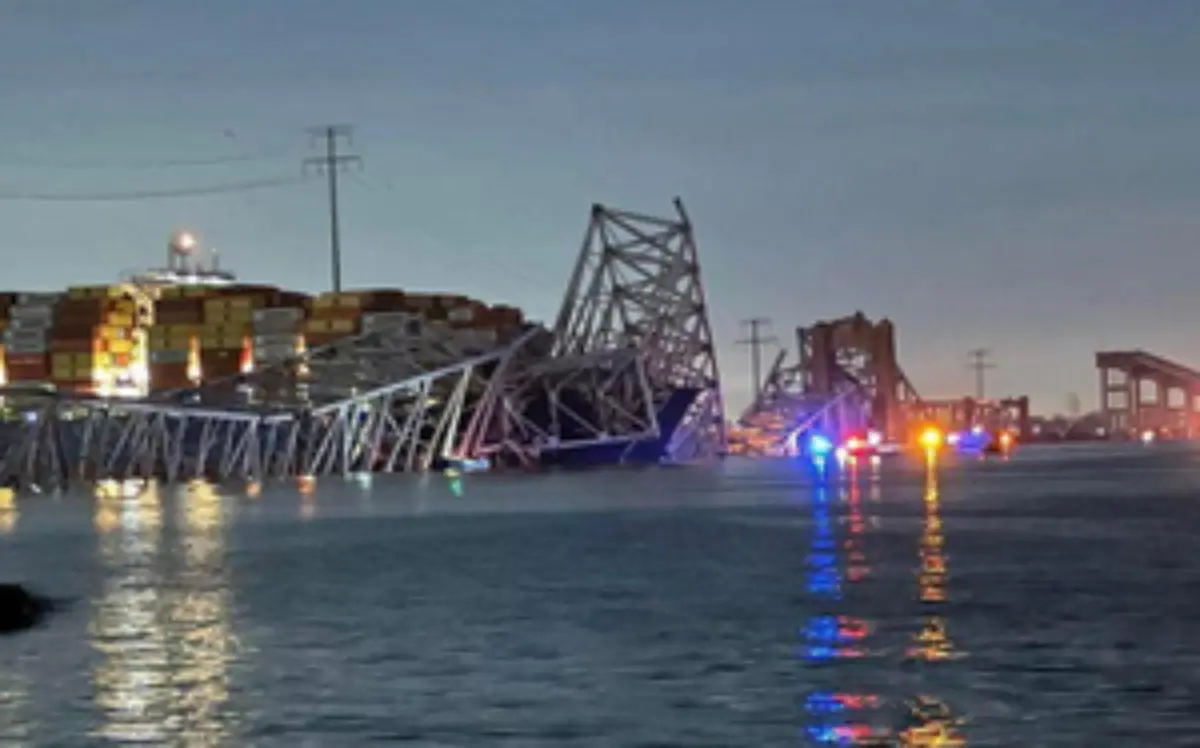
The collapse occurred on March 26, 2024, when the container ship lost electrical power and steering before striking the bridge, killing six construction workers.
Acting Attorney General Todd Blanche called the incident “a preventable tragedy of enormous consequence.” Blanche said the disaster resulted from what he described as a “reckless disregard for maritime safety regulations.”
The National Transportation Safety Board previously found that a loose wire connection in a high-voltage switchboard caused the vessel to lose electrical power, propulsion, and steering control.
The U.S. Justice Department previously reached a $100 million settlement with Synergy Marine and another company, Grace Ocean, to recover costs related to emergency response operations and debris removal from the Baltimore shipping channel.
Maryland officials have estimated that rebuilding the Francis Scott Key Bridge could cost more than $5.2 billion, with completion projected for 2030.