Five Nobels: UC’s Record Win Highlights Risk Of Federal Cuts To Science
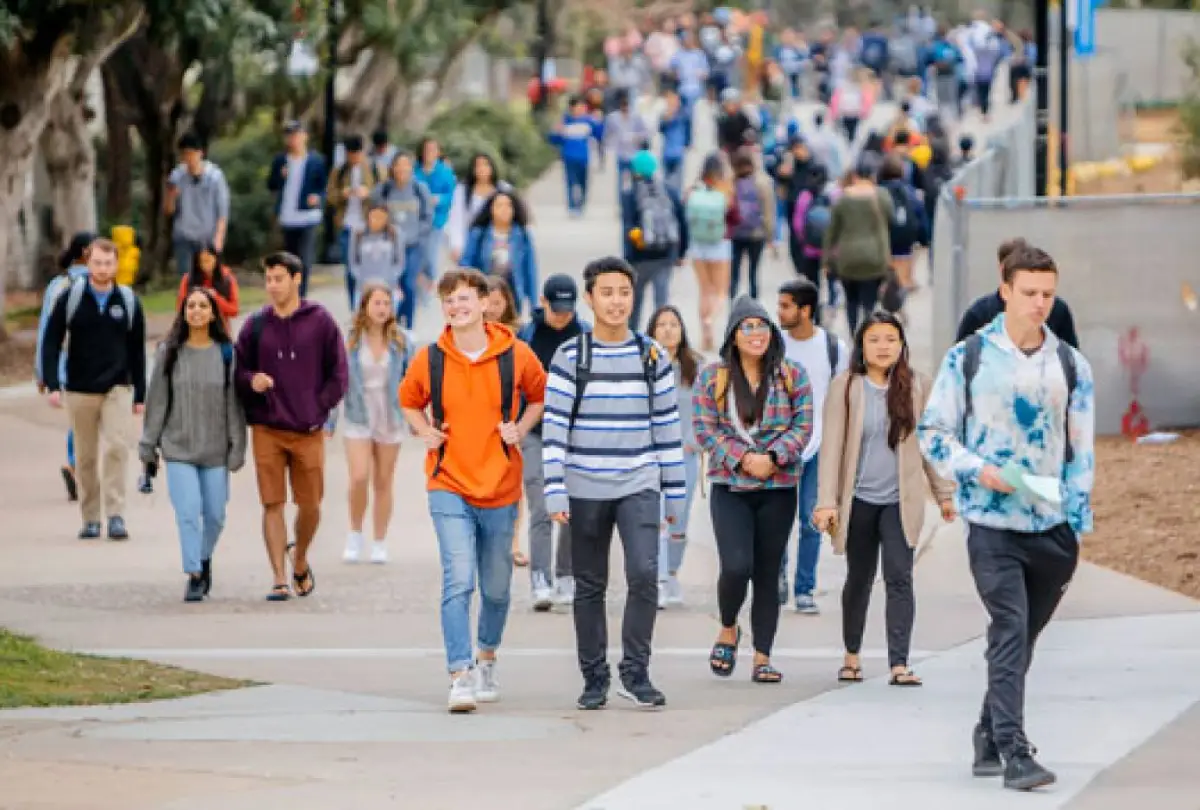
Photo: Elena Zhukova/University of California UC
India-West Staff Reporter
OAKLAND, CA- The University of California (UC) system has set a new world record, with five UC-affiliated scholars earning Nobel Prizes in a single year across Medicine, Physics, and Chemistry. The awards highlight world-changing discoveries—from advancing quantum computing to engineering new materials that pull drinking water from desert air—and underscore the critical role of sustained federal investment in university research.
UC faculty earned four Nobel Prizes this month, a higher total than any other university globally. Including alumni, the system’s affiliates took home five awards, bringing the total number of Nobel laureates affiliated with UC at the time of the award to 49, the most of any institution in history. Since 1934, 74 UC faculty and staff have earned 75 Nobel Prizes.
“These remarkable achievements by five UC-affiliated Nobel Prize winners reflect the very best of the world-changing teaching, research, and public service happening across our university,” said UC President James B. Milliken. Milliken added that the discoveries will make the world better off, allowing more communities to have clean drinking water, protecting more people from cyberattacks, and providing better treatments for diseases like arthritis and multiple sclerosis.
The University emphasized that these breakthroughs were directly enabled by decades of federal investment, but warned that such support is now at risk due to budget freezes and proposed reductions. This funding, which has long fueled American innovation and scientific leadership, is facing cuts that could slow the very discoveries that keep the U.S. at the forefront of global leadership.
The research recognized this year was supported across multiple federal agencies. The National Institutes of Health backed the work of Frederick J. Ramsdell (UC San Diego and UCLA alumnus), who shared the medicine prize for discovering a better understanding of the immune system leading to new treatments. The physics prize, shared by UC Berkeley’s John Clarke and UC Santa Barbara’s John M. Martinis and Michel H. Devoret for work foundational to quantum computing, was supported by the National Science Foundation, the Department of Energy, and the National Security Administration.
Finally, the chemistry prize, awarded to UC Berkeley’s Omar M. Yaghi for developing metal-organic frameworks, received funding from the NSF, DOE, and the Department of Defense.
The University noted it launched the Speak Up for Science campaign earlier this year to rebuild support for U.S. research and innovation.
Since Donald Trump took office in January 2025, his administration has pursued deep and widespread cuts to federal science funding through budget freezes, executive orders, and proposed budget plans.