Berkeley Study Backs India Pivot To Green Steel
BERKELEY, CA – India’s shift towards green steel production could help the country avoid nearly $1 trillion in long-term coking coal import costs and strengthen its position in future export markets, according to a study released by the India Energy and Climate Center (IECC) at the University of California, Berkeley.
The report said India’s next phase of steel expansion could otherwise lock the country into nearly six billion tons of coking coal imports over the next four decades if conventional blast furnace-based steelmaking continues to dominate.
“India is at a strategic decision point in steel,” said Neelima Jain, Director for Industrial and Trade Policy at the India Energy and Climate Center. “If future capacity is built around imported coking coal, the country would hardwire currency and price volatility risks into one of its most important industrial sectors. Green steel offers an alternative path.”
India is expected to nearly double its steelmaking capacity over the next decade. The report estimated that around 60–65 per cent of the planned expansion under India’s National Steel Policy could still follow the coal-intensive blast furnace-basic oxygen furnace route.
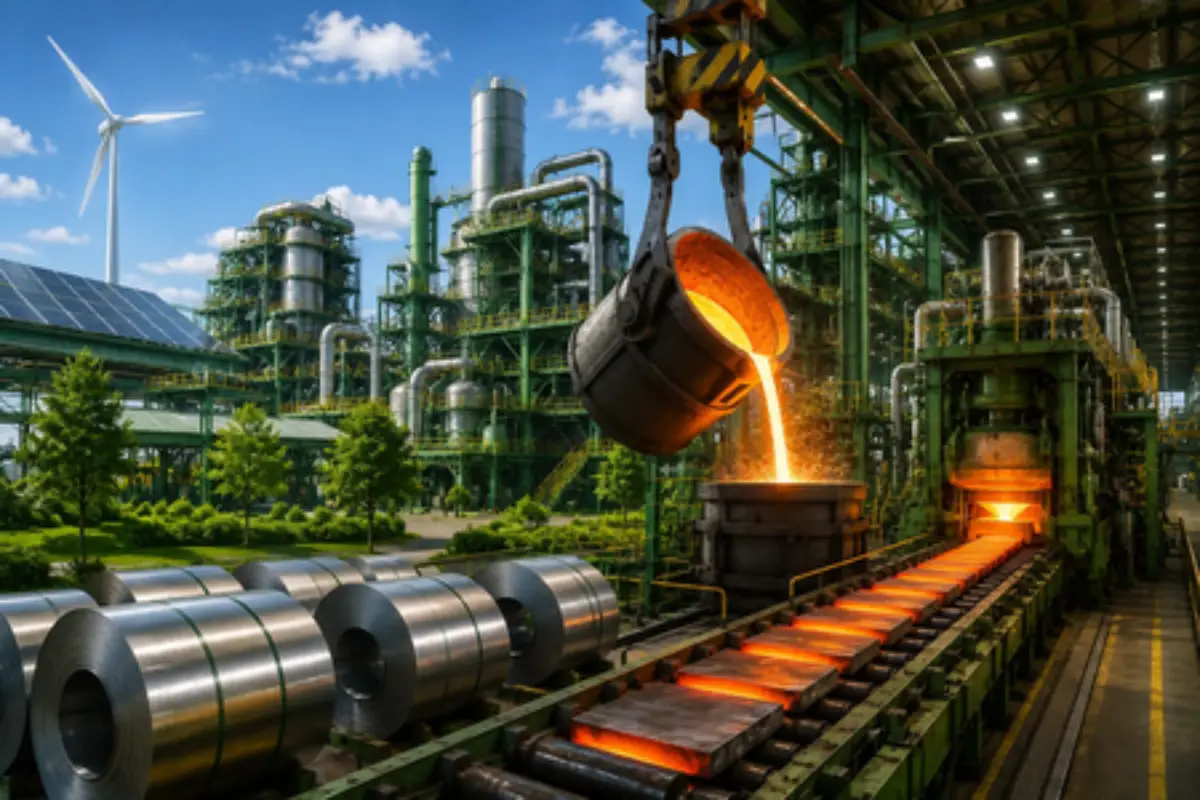
The study said India’s low-cost renewable energy resources provide a strong foundation for green hydrogen-based steelmaking, where hydrogen replaces imported coking coal in iron production.
It projected that by 2030, green hydrogen in India could cost about $3 per kilogram, allowing green steel production at around $562 per ton — roughly 5 to 10 per cent higher than conventional steel from new plants.
However, the report noted that conventional steel remains exposed to imported coking coal priced in US dollars, while green steel could rely on fixed-price, rupee-denominated renewable power contracts.
The study said that once historical coking coal price increases and rupee depreciation are factored in, green steel could achieve cost parity with, or even become cheaper than, conventional steel production by around 2030.
The report also warned that India’s carbon-intensive steel exports could face growing pressure from international carbon-related trade barriers, particularly in Europe.
“India’s green hydrogen costs are among the lowest globally,” said Nikit Abhyankar, Co-Faculty Director at the India Energy and Climate Center.
“India could be one of the few countries where green steel becomes economically viable within this decade, giving domestic producers an edge in export markets. It could also strengthen competitiveness in downstream manufacturing sectors such as automobiles and machinery.” (IANS)
Stay tuned for the latest environment news covering climate change updates, wildlife protection, pollution issues, and global efforts to preserve and protect our planet.